Table of Contents
Transcendental Meditation: Beyond Thought
Have you noticed it? That low-grade hum beneath your 2026 life. It’s not just the gentle ping of your AI assistant reminding you of the meeting you forgot to put on your calendar. It’s the pressure to optimize your sleep, your diet, your productivity. It’s the subtle, numbing comfort of having everything at your fingertips, while something deeper feels just out of reach.
If our devices are getting smarter, why does our inner world so often feel more cluttered, more scattered?
This is the curious paradox of our time. We have more tools for connection and calm than ever, yet true silence, the kind that isn’t just an absence of noise, but a profound presence, feels like a forgotten language. For years, I chased this silence. I tried mindfulness, watching my thoughts like clouds (they mostly felt like thunderstorms). I tried focused concentration (my to-do list always won). It all felt like more doing, more managing of the internal noise.
Then, I was introduced to something radically different: Transcendental Meditation, not as another self-help task to master, but as a gentle, effortless way to stop doing and be. Its promise wasn’t to manage thought, but to transcend it, to use the quietest sound, a personalized mantra, as a vehicle to slip beneath the surface chatter into the ocean of silent awareness itself. It felt less like learning a new skill and more like remembering a native tongue my soul had always known.

Why Going Beyond Thought Matters Now
Let's be honest: our attention is the most fought-over resource of 2026. Every app, notification, and headline is engineered to capture and hold it. The result isn't just distraction; it's a kind of cognitive fragmentation. We skim, we react, we multitask, but we rarely settle.
This constant engagement creates what I can only describe as a spiritual static. We're comfortable, oh, so comfy, but not necessarily fully alive. A numbness sets in, a feeling I wrote about in Embracing Discomfort: The Gateway to Personal Growth. We buffer ourselves from boredom, from quiet, from any space where we might actually have to meet ourselves.
This is where Transcendental Meditation becomes a form of quiet rebellion. It’s a deliberate, twice-daily decision to step off the conveyor belt of thought. It's not about escaping life, but about diving beneath its turbulent surface to touch the still point that exists within all of us. In a world screaming for our outer attention, TM is a gentle, powerful call to return home, inward.
Transcendental Meditation in Simple Language
So, what exactly is it? Developed by Maharishi Mahesh Yogi, TM is a simple, mental technique practiced for 20 minutes, twice a day. Its power lies in its simplicity and lack of effort.
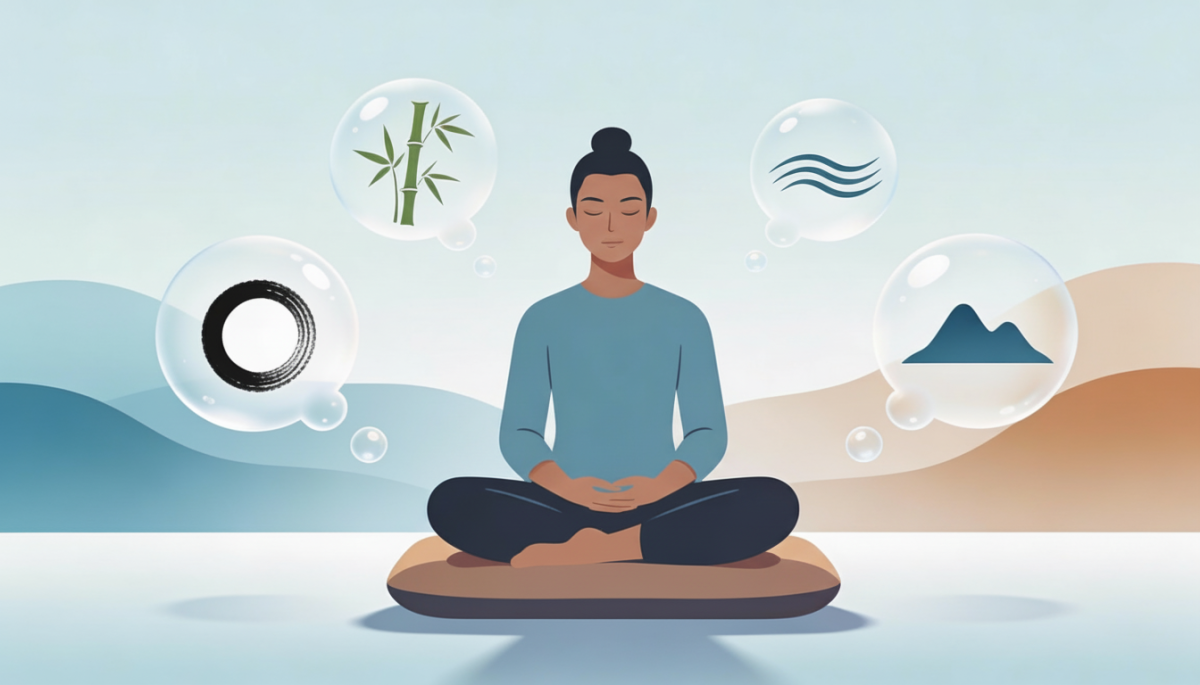
Here’s the core of it: In a proper TM course, you’re given a specific sound, a mantra, suited to you. This isn't an affirmation like "I am peaceful." It's a vibration, a vehicle. You don't chant it aloud or concentrate on it fiercely. You introduce it gently into your awareness and then allow it. As you do this, something natural happens: your active mind, attracted to the fainter, more interesting mantra, begins to settle. Thought activity naturally diminishes. You journey from active thinking to quiet thought to the spaces between thoughts… and finally, you may transcend thought altogether, arriving at a state of pure, silent awareness. They call this samadhi, not a trance, but a state of restful alertness where you are fully conscious, but without an object of consciousness.
This is the key difference between TM and other wonderful practices.
- Mindfulness asks you to notice thoughts and sensations with detached observation.
- Zen (as in our guide to Zen Meditation: Sitting in Stillness) often emphasizes "just sitting" with what is, without grasping or rejecting.
- Transcendental Meditation uses the mantra as a gentle probe to go beneath the layer of thought, accessing the silent source from which thought emerges.
One isn't better than the other; they are different doors to the same house. TM is the door marked "Effortless Silence."
The Mountains Behind the Method: A Himalayan Soul
To understand TM’s essence, you must feel the soil from which it grew. It’s not a corporate wellness program; it’s a modern packaging of an ancient Vedic thread, one woven deeply into the fabric of the Himalayas.
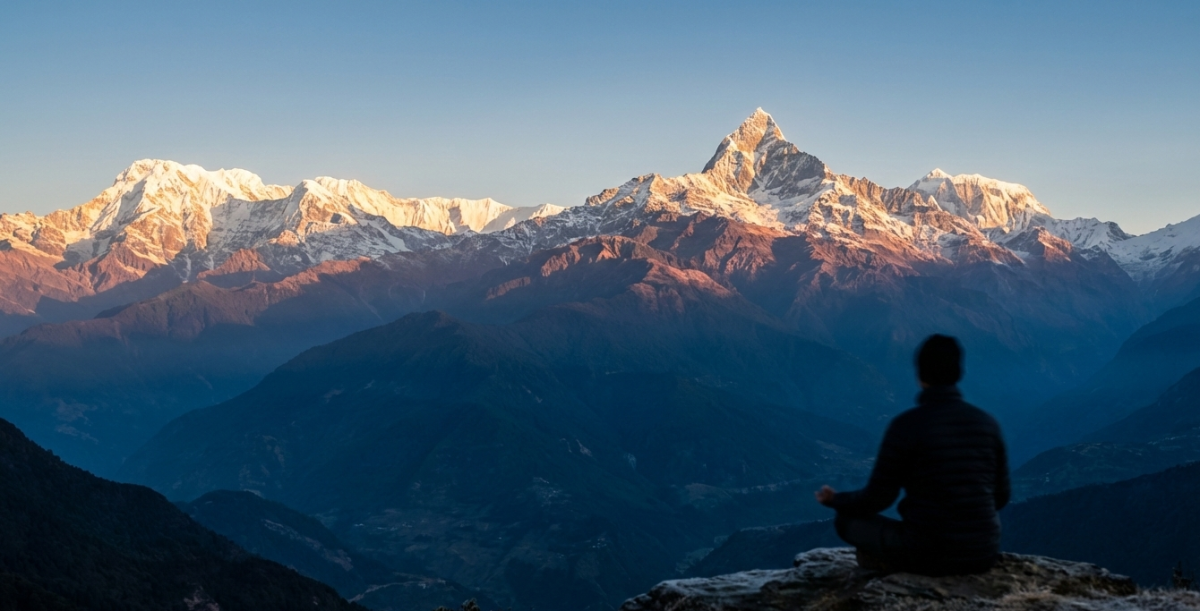
I remember a pre-dawn in Boudhanath, Nepal. The massive, watchful eyes of the stupa were just visible in the indigo light. The only sounds were the soft shuffle of a monk’s robes and the distant murmur of mantras from a courtyard. The air itself felt thick with silence, a palpable, nourishing presence. In the caves of Pokhara and the halls of Kopan Monastery, this isn't an absence of sound, but a presence of something far greater.
TM offers a systematic way to access this inner Himalayan silence, no matter where you are. It connects you to the same contemplative current that Himalayan rishis and Buddhist meditators have tapped into for millennia. Philosophically, the "pure awareness" of TM is a direct experience of what Buddhist texts call Sunyata (Emptiness), not a void, but a fertile, boundless potentiality. It's the Vedantic Atman, the true Self that exists before all roles and thoughts.
As you touch this inner quiet, something beautiful happens: the noisy edifice of your personal narrative, including those deeply held limiting beliefs we often carry, begins to seem less solid. You create space around them, which is the first and most profound step in transforming them.
The Science of Silence: Why This Isn't Just Mysticism
Now, if you're like me, part of you might wonder: "This sounds beautiful, but is it just a nice feeling?" This is where TM stands apart. It's perhaps the most extensively researched meditation technique in the world.
Studies, many published in peer-reviewed journals (you can find summaries on PubMed), show that TM doesn't just feel relaxing; it creates a unique physiological state. Scientists call it "wakeful hypometabolic rest." Your body reaches a state of deep rest, deeper than sleep, while your mind remains quietly alert. This biochemical "reset" has tangible Transcendental Meditation benefits:
- Significantly reduced cortisol (the primary stress hormone) and lowered blood pressure.
- Increased EEG coherence, meaning different parts of your brain start communicating in a more synchronized, orderly way.
- Documented benefits for anxiety, PTSD, and insomnia.
Think of it as a "technology of consciousness." You're not just calming down; you're upgrading your nervous system's baseline. This deep restoration is the ultimate foundation for building spiritual resilience. It's not about gritting your teeth through stress, but about developing an inner unshakability that stress simply can't penetrate.
For our 2026 lives, the benefits are profoundly practical: a clearer focus to work alongside AI without being distracted by it, a wellspring of non-algorithmic creativity, and an emotional steadiness that doesn't get thrown by the constant churn of change.
Your Pathway: From Curiosity to Practice
If this resonates, you might be asking, "Okay, how do I actually do this?" Here’s my sincere, no-pressure guidance on how to meditate beyond thought.
First, understand the traditional path. TM is formally taught one-on-one by certified teachers. This isn't gatekeeping; it's about precision. The personalized mantra and the careful, correct instruction ensure the technique is effortless from the start. Trying to "figure it out" from a book often leads to subtle strain, which defeats the entire purpose. The best first step is to visit the official Transcendental Meditation website to find a local or online course.
While you explore, create a prelude. You can cultivate the "container" for this practice now. Before you even learn TM, sit for five minutes and simply follow your natural breath. This isn't the meditation, but a way to signal to your body and mind: "We are settling now." Our guide to Breath Awareness is perfect for this.
Integration is everything. The real magic of TM isn't just the 20 minutes of silence, but how you carry that silence forward. After meditating, don't jump for your phone. Sit for one more minute. Feel your body. Notice the quality of the quiet in the room. Then, move slowly. Try to bring that gentle, unhurried awareness to your first activity, whether it's making tea or starting work. This bridges your practice directly into the principles of Mindfulness in Daily Activities.
Please, normalize the hurdles. Your mind will wander. You’ll have sessions where you feel bored or think, "Is this doing anything?" This is all part of the path. Be incredibly gentle with yourself. For more on working with these natural obstacles, our articles on Overcoming Meditation Obstacles are a great companion.
Tools for Your Silent Space (Optional, But Helpful)
The only real tool for TM is your own awareness. But creating a gentle, supportive environment can signal deep respect for your practice. Here are a few items I've found genuinely helpful:
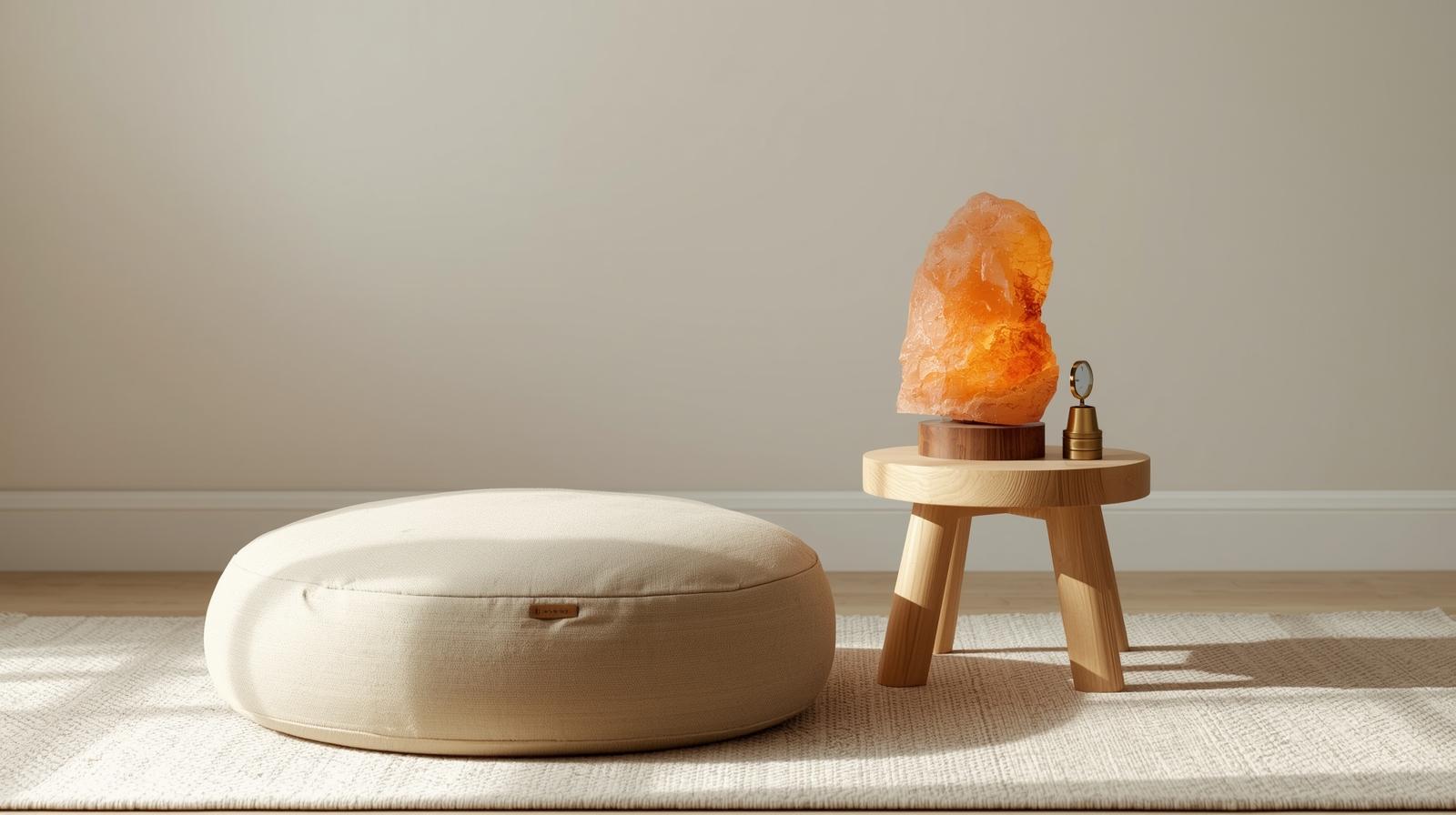
- For Posture: A firm meditation cushion (zafu) or a simple kneeling bench. The goal is to keep your spine effortlessly upright, not to contort yourself. A little height under your hips can make all the difference.
- For Atmosphere: A Himalayan salt lamp or a simple, unscented soy candle. The soft, warm glow gently defines your meditation space without being a sensory distraction.
- For Timing: A gentle, non-digital meditation timer with a soft chime. This removes the anxiety of peeking at your phone and lets you surrender completely to the time.
(A quick, transparent note: Some links above are affiliate links. If you choose to purchase through them, I may receive a small commission at no extra cost to you. I only ever recommend tools I have personally used and found to be genuinely supportive on the path.)
The Journey Home
In 2026, the most radical act may not be adding another optimization to your life, but discovering the infinite space within you that needs no optimization at all.
Transcendental Meditation is a pathway to that space. It’s a daily homecoming to the part of you that was never scattered, never anxious, never fragmented, the silent, aware presence that exists beyond thought.
It’s not an escape. It’s a return. And from that place of inner wholeness, you engage with the buzzing, beautiful, complicated world not from a deficit, but from a profound surplus of peace.
So, I'll leave you with this question, the one that started it all for me: What would it feel like to spend 20 minutes twice a day, simply resting as the deepest version of yourself, without fixing or changing a single thing?
The invitation is always here. The silence is already waiting.



Comments (0)
No comments yet. Be the first to comment!
Leave a Comment