
Table of Contents
Embracing Discomfort: The Unexpected Gateway to Personal Growth (A 2026 Guide)
Your smart home anticipates your needs before you feel them. An algorithm gently nudges you toward content you already agree with, products you already like. Your entire digital ecosystem, from the temperature of your room to the dopamine hits in your feed, is engineered for one thing: keeping you comfortable. And yet, here you are. Quietly wondering why, amidst all this seamless ease, your soul sometimes feels… numb. A little untested. Like a muscle that’s never been asked to lift anything real.
I know the feeling intimately. A few years back, I signed up for a three-day retreat at a stone-walled monastery in the Nepali hills outside Pokhara. I arrived with my fancy notebook and my spiritual aspirations. What I got was a thin cotton mat on a cold stone floor, pre-dawn wake-up bells, and a silence so profound it felt deafening. By the second evening, a primal, ridiculous part of my brain was crafting elaborate escape plans. It wasn’t the cold or the unbearable quiet; it was the sheer, unmediated discomfort of being alone with myself, with nothing to buffer the encounter.
Here’s what I learned, shivering under that scratchy blanket: real growth rarely happens on the couch. It happens in the spaces that feel a bit exposed, uncertain, or stretched. In our world of 2026, where comfort is often just a voice command away, learning to lean into productive discomfort isn’t a spiritual luxury. It’s a survival skill for the soul. This isn’t about glorifying suffering or self-punishment. It’s about learning to read that inner flinch, that urge to scroll or snack or flee, as your spiritual GPS whispering in a static-y signal: “Growth this way. I promise.”
Why Your Brain Throws a Tantrum When You Get Uncomfortable (And How to Calm It)
Let’s be clear: your aversion to discomfort isn’t a character flaw. It’s a 2-million-year-old success story. Your brain is a magnificent, high-tech machine wired for one primary directive: keep you safe and conserve energy. Predictability equals safety. Novelty, effort, and uncertainty? The brain flags those as potential threats. That flutter of anxiety before speaking up in a meeting, the mental resistance to a morning meditation, it’s not weakness. It’s your ancient internal security system saying, “Whoa, uncharted territory. Proceed with caution… or maybe don’t proceed at all.”
The key is learning to distinguish between harmful pain and productive discomfort. Harmful pain is a signal to stop, a sharp physical injury, a toxic relationship, a genuine trauma trigger. Productive discomfort is the friction of growth. It’s the shaky voice when you set a boundary. The burning quads in a new yoga pose. The awkward silence in a conversation where you’re being real instead of pleasant. One diminishes you; the other, however unnerving, expands your capacity.
I’ll never forget my first ten-day silent retreat. By hour two, my mind was a riot. It wasn’t just thoughts; it was a full-blown mutiny. “This is stupid. You’re missing important emails. Your back hurts. That person is breathing too loudly. WE SHOULD LEAVE.” My brain, that master storyteller, crafted epic tales of justification for fleeing. Sitting through that internal tempest was my first real lesson: the discomfort wasn’t the problem. My war with it was. When I stopped fighting and just acknowledged, “Ah, this is what panic feels like in my body. These are the stories it tells,” something shifted. The monster lost its power.
If your mind throws similar tantrums, know you’re in vast company. Our guide on Transforming Limiting Beliefs digs into how to rewrite those old “safety first” stories that keep our comfort zones so small. For the science-minded, the American Psychological Association offers valuable resources on how moderate stress can actually foster resilience and growth. This concept is known as stress inoculation, and it’s a real phenomenon.
The Three Flavors of Spiritual Growing Pains
Discomfort comes in different forms, each a teacher in its own right. Recognizing which one you’re dealing with can help you meet it with the right tool.
1. Physical Discomfort
This is the most straightforward. The ache in your knees from a long meditation sit, the jarring shock of a cold shower. The hunger pangs during a mindful fast. In Nepal, I’ve seen Sadhus and local practitioners embrace physical austerity not as a punishment, but as a tool for piercing mental fog. The cold isn’t the enemy; it’s the alarm clock for a sleeping nervous system. When you can’t get cozy, you’re forced to be alert, present, and incredibly aware of the life humming through you.
2. Emotional Discomfort
This one’s trickier. It’s the heavy pit in your stomach before a difficult conversation. The vulnerability hangover after sharing a deeply personal truth. The fear of being seen as “too much” or “not enough.” I once witnessed a Tibetan Buddhist debate in Sera Monastery, monks clapping, voices raised, intensity blazing. It looked aggressive to my eyes. But watching closely, I saw no malice, only a passionate, razor-sharp pursuit of truth. They were leaning into the intellectual and emotional discomfort of being challenged, because that’s where understanding deepens. Our guide to Zen Meditation offers a beautiful framework for sitting with emotional weather without being swept away by it.
3. Existential Discomfort
The granddaddy of them all. This is the vertigo that comes when old beliefs crumble. The haunting question of “what’s my purpose?” in the quiet of the night. The profound, unnerving freedom of realizing no one is coming to save you, that you are the architect of your life. Zen calls this “The Great Doubt.” It’s not a problem to be solved, but a sacred, fertile ground. From the turmoil of “I don’t know,” a more authentic, less constructed “I” can finally emerge.
A Case Study in Clarity: The Himalayan Ice Bath
Theory is one thing. Practice is another. My most visceral teacher in this was a freezing river in the Himalayas, near the pilgrimage site of Muktinath.
At dawn, I watched local villagers, elders, and young kids casually wade into water fed by glacial melt. They laughed, splashed their faces, and went about their day. My every instinct, honed by central heating and comfort culture, revolted. This is optional suffering, my mind reasoned. You’re a guest. You don’t have to prove anything.
But something in their easy, unceremonious ritual called to me. So, I took off my shoes.
The first sensation wasn’t cold; it was a white-hot, electric shock that short-circuited all thought. My breath ripped from my lungs in a ragged gasp. For about ten seconds, it was pure, animal panic. Get out.
Then, something broke. The story ended. There was no “me” anymore, just sensation, a million piercing needles, a heart pounding against ribs, the stunning clarity of sheer aliveness. The mental noise, the worries, the to-do lists, the endless commentary, was simply gone. Scoured away by the cold. I stumbled out a minute later, skin on fire, feeling more awake and vibrantly present than I had in years. The warmth that flooded my body afterward wasn’t just physical; it was a deep, cellular gratitude.
The lesson wasn’t “be tough and take cold baths.” It was this: Discomfort, when met head-on, can act as a brutal but effective erasure of our mental narratives. It drags us out of the stories in our head and plants us, gasping and alive, into the raw, undeniable reality of the present moment. That’s where truth lives.

Your 2026 Toolkit: 5 Ways to Befriend Discomfort
Okay, so you’re not jumping into a Himalayan river tomorrow (unless you want to!). Here are five practical, scalable ways to start building a friendship with the uneasy feelings that signal growth.
1. The Daily Micro-Challenge
This is about recalibrating your “discomfort dial.” One small, intentional act daily. It could be: taking a cold 10-second rinse at the end of your shower, speaking up with a contrary opinion in a low-stakes chat, or sitting for five minutes after you finish eating without immediately reaching for your phone. The task is irrelevant. The practice is in noticing the resistance and doing it anyway. Afterwards, ask: “What was underneath my urge to avoid that?”
2. Let Meditation Be Your Lab
Your meditation cushion isn’t an escape from discomfort; it’s a laboratory to study it. Next time you sit, and an itch arises, or anxiety bubbles up, or restlessness screams for you to move, don’t just for a minute. Observe the sensation as a scientist would. Where is it in your body? What’s its texture? Does it change? You’ll discover that discomfort is not a solid wall, but a wave that crests and falls. Our post on Common Mindfulness Obstacles is a great companion for this practice, normalizing all the “messy” things that happen when we sit still.
3. The “Why” Journal
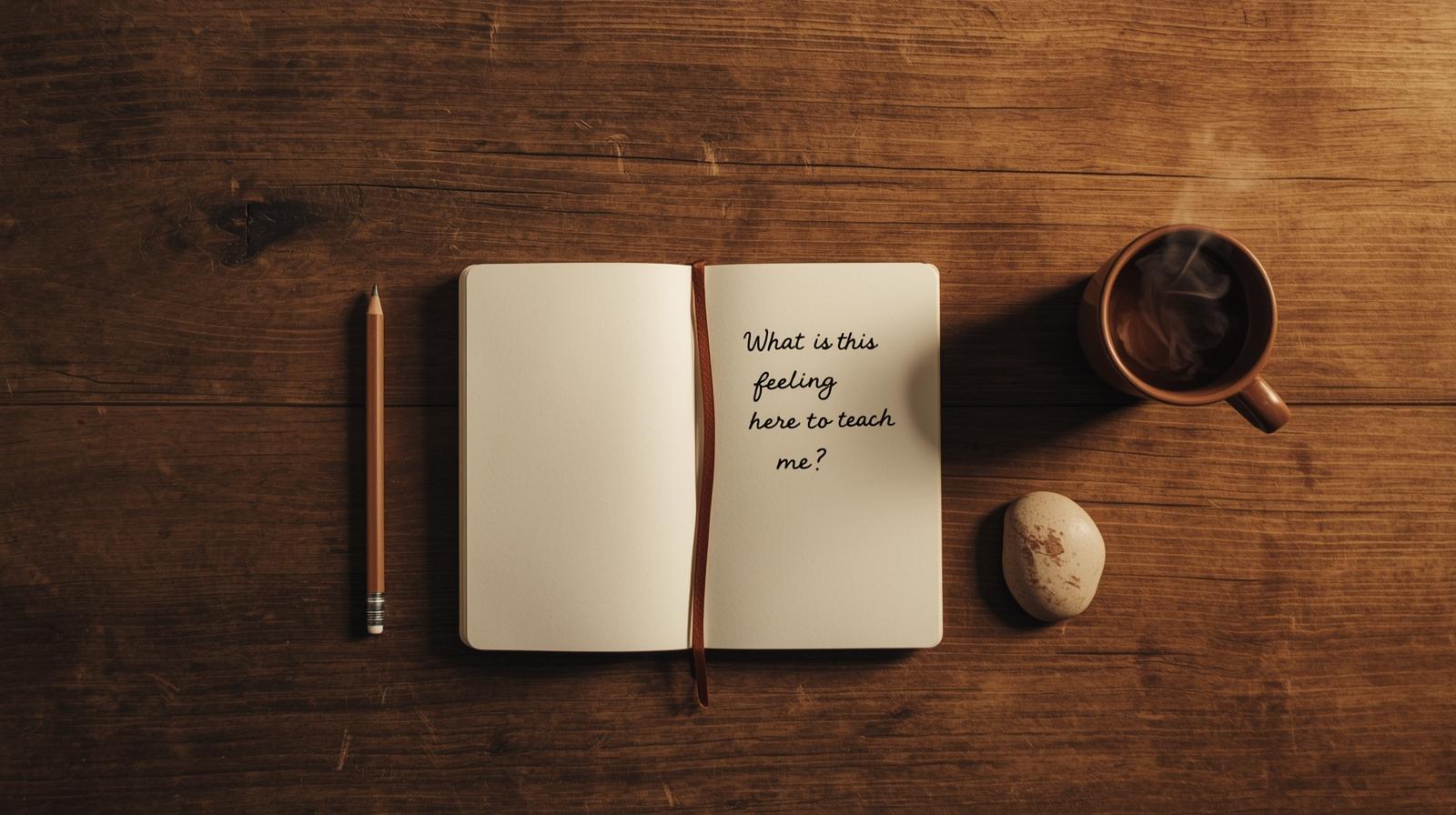
When a bigger wave of discomfort hits, after an argument, when facing a fear, give it voice. I keep a simple, sturdy journal for this. I write the prompt: “What is this feeling here to teach me?” and answer it three times, each time going deeper past the superficial answer.
- Answer 1: “It’s here to teach me that I’m bad at confrontations.”
- Answer 2: “It’s here to teach me that I value harmony over my own truth, and that’s costing me.”
- Answer 3: “It’s here to teach me that my voice matters, even if it shakes.”
Having a dedicated, beautiful space for this work helps. I’m fond of this specific brand of journal—its quality makes the practice feel like a sacred dialogue, not a chore.
4. Weekly Comfort Zone Expansion
Once a week, schedule something that stretches you. Not a trauma, just a gentle stretch. Sign up for a class where you’ll be a beginner. Go to a movie or a café alone. Share a piece of creative work you’ve been hiding. The goal isn’t mastery; it’s tolerance. It’s teaching your nervous system that novelty is safe, even when it’s not comfortable.
5. Find a Discomfort Ally
Share your weekly challenge with a trusted friend or a community (our Spiritual Nomad circle is a great place for this!). Accountability isn’t about shame; it’s about shared courage. Celebrating the attempt is what matters. A simple text saying “I did the scary thing” can transform the experience from a solitary ordeal into a shared victory.
A quick note on gear: While you need nothing but your own breath to start, I often get asked about meditation cushions. I recommend a firm zafu cushion like this one. A good cushion doesn’t let you sink into a sleepy slouch; it supports an alert, dignified, and yes, initially less “comfy” posture that is foundational for staying present with discomfort.
The Crucial Caveat: When Discomfort is a Red Flag
This is the most important part. Not all discomfort is a gateway. Some is a stop sign.
Spiritual growth should never be a guise for self-harm or ignoring trauma. The “Middle Way” taught in Buddhism isn’t a midpoint between misery and bliss; it’s the path of wisdom that avoids the extremes of harsh austerity and indulgent clinging.
How do you know the difference? Ask:
- Is this expanding my sense of self, or shrinking it? (Does it feel like building strength or like breaking down?)
- Am I feeling scared-but-curious, or terrified-and-unsafe? (Butterflies vs. dread.)
- Am I honoring my body’s clear “no,” or overriding it to prove my “spiritual toughness”?
Using discomfort as a tool requires ruthless honesty and self-compassion. Sometimes, the bravest, most growth-oriented act is to say “no, this is too much,” to seek therapy, to rest, to set a boundary. The teachings at Plum Village, founded by Thich Nhat Hanh, beautifully emphasize that true mindfulness includes deep listening and compassion for our own limits.
The Uncomfortable Path Home
So here we are. In a world that sells comfort by the bucketload, you now have a map to a different kind of treasure.
Embracing discomfort isn’t about proving your toughness. It’s about cultivating intimacy with the full spectrum of being human. It’s the grit in the oyster that, with patient, non-resistant awareness, can become a pearl of wisdom.
Your discomfort isn’t proof that you’re on the wrong path. Often, it’s the clearest sign you’re on the right one, walking past the old fences of your familiar self.
Some days, you will choose the warm blanket over the cold plunge. You’ll skip the hard conversation. You’ll scroll instead of sit. That’s okay. This isn’t about perfection. It’s about the gentle, persistent return to the edge of your becoming, and taking one honest, shaky step beyond it.
What’s one small, conscious discomfort you’re willing to embrace this week? Share it in the comments below, not as a brag, but as a commitment. And if you’re ready to practice befriending the unease on the meditation cushion, your next step is our guide on Overcoming Meditation Obstacles.
Remember, the most profound journeys aren’t about climbing distant, perfect mountains. They’re about learning to walk, with tenderness and courage, through the rugged, beautiful, and uncomfortably real landscape of your own life.
Some links in this guide are affiliate links. If you purchase through them, I may receive a small commission at no extra cost to you. This directly supports Spiritual Nomad and allows me to continue creating free, in-depth content. I only ever recommend tools and resources I have purchased, used, and genuinely love in my own practice.




Comments (0)
No comments yet. Be the first to comment!
Leave a Comment