Table of Contents
Building Resilience: The Spiritual Art of Bouncing Back from Life’s Challenges
There was a week, not long ago, when everything felt like it was crumbling. My plans, my confidence, even my sense of who I was. I’d pushed through a period of burnout, telling myself I just needed to be stronger, only to be met with a personal loss that left me breathless. I sat on my floor, surrounded by the quiet chaos of an unmade life, and thought, “I don’t know how to come back from this.” Resilience, back then, just sounded like another pressure word, something for titanium people, not for someone who felt so desperately fragile.
If that lands for you, if you’ve ever faced a breakup, a health scare, a lost job, or just a slow drip of disappointment that hollows you out, I want to whisper something to you: you are not failing at being strong. You are learning, in the most human way possible, what resilience actually is.
It is not a shield that makes you unbreakable. It’s not stoic silence or relentless positivity. Real resilience is a spiritual art: the practice of bending without snapping, of learning without becoming bitter, of staying open to life even when it hurts. It’s the quiet, daily work of returning to yourself, over and over, with more compassion and a little more wisdom each time. This is the art of bouncing back, not to who you were, but to who you are becoming. Let’s explore its pillars, its practices, and the gentle, firm strength it cultivates.
Redefining Resilience in 2026
We’ve been sold a faulty blueprint. We’re told resilience is gritting your teeth, suppressing the “bad” feelings, and charging forward with a smile. That model is exhausting, and frankly, it breaks people. I tried it. It left me feeling like a robot with a cracked screen, functional on the outside, utterly shattered within.
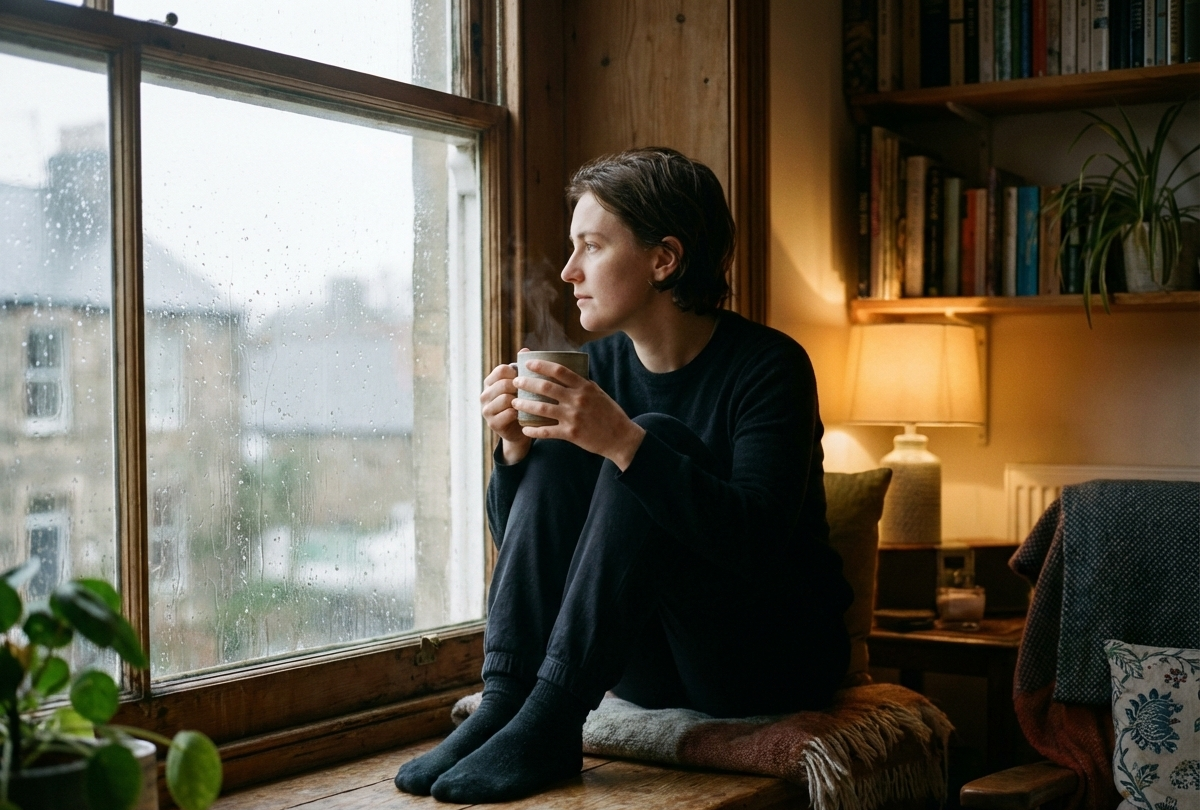
Spiritual resilience is something else entirely. It’s relational. It’s about staying in a conscious, honest relationship with your own experience, even, especially, when that experience is pain, fear, or grief. It’s letting the storm hit you, feeling the cold rain, and yet knowing, in your bones, that you are not the storm. You are the one experiencing it. And you have a choice in how you respond.
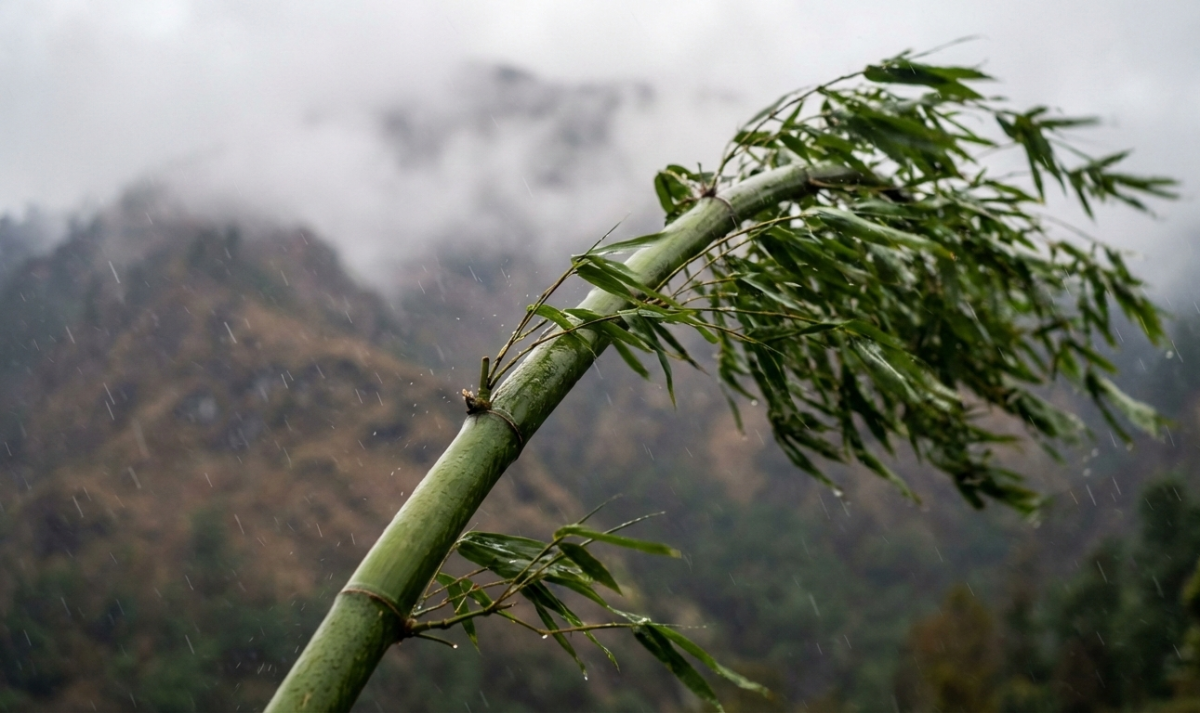
Think of bamboo. I remember watching a grove in the Himalayan foothills during a monsoon gust. The stalks bowed deeply, leaves thrashing, touching the ground. But they didn’t snap. When the wind passed, they swayed back up. That’s our model. Resilience isn’t rigid oak; it’s flexible bamboo. It’s the strength to yield, to feel, to move with the pressure, trusting in your inherent capacity to rise again.
At its heart, this requires two things: a growth mindset (the belief that challenges are for learning, not just enduring) and radical self-compassion (being on your own side through the process). It’s what I explore in my piece on Embracing Discomfort: The Gateway to Personal Growth, it’s about leaning into the lean, not resisting it.
As the Greater Good Science Centre outlines, true resilience is linked to post-traumatic growth, a concept that gives us a much more hopeful map.
Four Pillars of Inner Strength
This art is built on foundational pillars. They’re not things you achieve once; they’re states you practice returning to, like tuning an instrument.
1. Acceptance (Facing What Is)
For years, I confused acceptance with approval. “I don’t accept this! It shouldn’t be this way!” I’d rage. But denial is like trying to navigate a room with your eyes squeezed shut; you’ll just keep bruising your shins on the furniture. Acceptance is simply turning on the light. It’s saying, “This is what is happening right now. This is the reality I am in.”
I learned this starkly during a silent retreat in Nepal. A fierce cold settled in, and my mind screamed against the discomfort. Finally, shivering in my bunk, I just thought, “It is cold. This is the experience.” The moment I stopped arguing with reality, the suffering lessened. The cold was still there, but my war with it ended. This is mindfulness for resilience in its purest form: seeing clearly without immediately judging. It’s the first, non-negotiable step. You can’t navigate a landscape you refuse to see.
2. Meaning-Making (Finding the Thread in the Chaos)
This is not about slapping a “everything happens for a reason” sticker on trauma. That can be cruel. Finding meaning in suffering is more subtle. It’s asking, “Now that this has happened, what can I learn from it? How can it shape me into someone who can understand more, help others, or live with greater purpose?”
Viktor Frankl, who survived the Holocaust, founded his logotherapy on the principle that our primary drive is not pleasure, but meaning. He observed that those who could find a shred of meaning, a loved one to live for, a task to complete, a different perspective on their suffering, were the ones who survived spiritually intact. Maybe your job loss opens a door to a deeper calling you’d been ignoring. Maybe your illness teaches you the profound value of a single, pain-free breath. You weave the thread of meaning through the chaos, and it becomes a lifeline you can hold onto.
3. Self-Compassion (Being on Your Own Side)
Here’s where most of us stumble. Our inner critic becomes a brutal drill sergeant: “Why are you so weak? Get over it! Others have it worse!” But would you speak to a devastated friend that way?
Self-compassion is switching from critic to ally. It’s placing a hand on your heart in your hardest moment and saying, “This is really hard. It’s okay that this hurts. May I be kind to myself here?” It’s the foundational practice that makes all the others possible. Without it, every attempt at resilience just becomes another form of self-punishment. I often see this collide with spiritual practice, which is why I wrote about Common Mindfulness Obstacles, where we learn that beating ourselves up for “failing” at mindfulness is the very thing we need to release.
4. Community and Connection (We Don’t Bounce Back Alone)
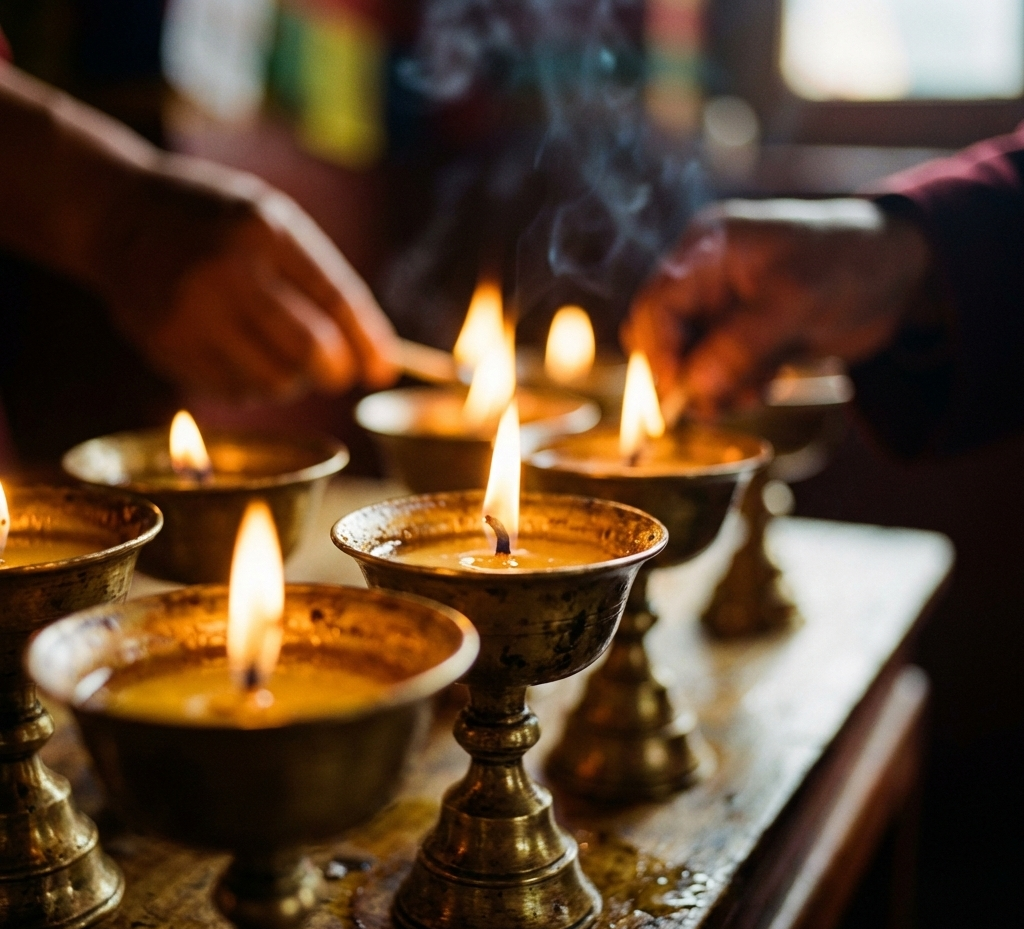
The myth of the resilient individual is a lonely one. True resilience is woven into the community. In Nepal, the concept of sangha, spiritual community, is vital. I’ve sat in circles at Boudhanath Stupa, where strangers shared tea and stories of loss, their faces lit by butter lamps. There’s a palpable strength in being witnessed, in having your pain held by others without them trying to fix it.
Asking for help is not a resilience failure; it’s a resilience strategy. It’s admitting, “My strength alone isn’t enough right now, and that’s human.” Your community, a friend, a family member, a therapist, a support group, becomes the net that catches you so you can eventually climb back up. We heal in connection. (This is why we built our own Spiritual Nomad community, as a reminder that we’re all walking this path together.)
Resilience in the Himalayas and Beyond
There are places where resilience isn’t a concept; it’s the fabric of daily life. In the high villages of Nepal, life is a constant dialogue with uncertainty, unpredictable weather, rocky soil, and remote distances. I’ve watched villagers face a power cut that would send me into a frustrated spiral with nothing but a shrug, the lighting of a kerosene lamp, and a continuation of their conversation. It’s not that they don’t feel the inconvenience. It’s that their identity isn’t tied to convenience.
At monasteries like Kopan, the practice is everything. Monks rise before dawn for meditation, not as an escape from hardship, but as a training for it. The Buddhist teaching of dukkha, often translated as suffering or unsatisfactoriness, is the first Noble Truth. Life has inherent challenges. But the subsequent truths offer the path through it. The resilience is in the path itself: the ethical living, the mindful attention, the dedicated practice.
It’s the Zen “just sitting” (shikantaza) with whatever arises, boredom, pain, grief, joy. You sit through the internal storms, so you learn you can sit through the external ones. This is the core of Zen Meditation: Sitting in Stillness. You’re building your inner anchor. These traditions, which I weave into Transforming Limiting Beliefs: A Nepali and Asian Mindset Guide, teach us that resilience is built in small, repeated gestures of return, not in grand, heroic one-time efforts.
How to Build Spiritual Resilience (Without Overwhelm)
Theory is lovely, but practice is where we live. Here are five concrete ways to weave resilience into your days. Start with one.
Practice 1: The “Ground and Breathe” Response
Why it helps: It creates a tiny gap between the trigger and your reaction. In that gap, you find choice.
How to do it: When news hits or anxiety spikes, pause. Feel your feet firmly on the floor. Notice your next three breaths, in and out. Silently name what you’re feeling: “anger,” “fear,” “tightness.” That’s it.
Example: After a difficult email, instead of firing back, you plant your feet, breathe three times, and say “hurt… frustration.” You’ll respond from a calmer place. For more, see Breath Awareness: Your Simple Anchor to the Present.
Practice 2: The Resilience Journal Ritual
Why it helps: It externalises the chaos and turns reflection into actionable learning.
How to do it: Each evening, write three lines:
- What challenged me today? (Just the facts.)
- How did I respond? (With kindness? With panic? With avoidance?)
- What did I learn, or what could I try next time? (This builds your personal resilience playbook.)
Example: “Challenge: My presentation was criticised. Response: I felt defensive and shut down. Learn: I can acknowledge the feedback, sit with the discomfort, and later extract one useful point.”
(Disclosure: Some of the links below are affiliate links. If you choose to purchase through them, I may earn a small commission at no extra cost to you. I only recommend tools I genuinely find supportive in practice.)
I find that a dedicated journal helps cement this ritual. I’m fond of the Leuchtturm1917 for its durable feel and dotted pages that give structure without constraint—it feels like a companion for the journey.
Practice 3: The “One Tiny Brave Act” Method
Why it helps: It rewires your brain’s fear response by proving you can handle discomfort.
How to do it: Each day, consciously do one small thing that stretches your comfort zone. It could be sending a vulnerable email, asking for help, saying no to an extra demand, or simply tolerating a feeling without distracting yourself.
Example: Today, my brave act was to call and schedule a doctor’s appointment I’d been avoiding. Tiny step, big relief.
Practice 4: Mindful Movement for Tough Days
Why it helps: When the mind is a cyclone, the body can be the anchor. Movement processes stagnant emotional energy.
How to do it: On days you can’t “sit” to meditate, move with awareness. A slow walk where you feel each footfall. Gentle yoga, focusing on the breath in each stretch. Even pacing your living room, feeling the swing of your arms.
Example: After a stressful call, I’ll often do five minutes of simple sun salutations. It’s less about exercise and more about resetting my nervous system. For a guide, Walking Meditation: The Complete Guide is a great resource.
Practice 5: Supportive Environment Cues
Why it helps: Your environment can either drain you or remind you of your strength.
How to do it: Create a small “resilience corner.” A simple shelf or table with a candle, a stone from a meaningful hike, your journal, and a mala. It’s a visual touchstone for your path.
Example: My corner has a candle from Boudhanath and a smooth river stone. Lighting the candle is a signal to my nervous system: “This is time to return.” A supportive cushion, like this meditation zafu, can make that sitting practice physically sustainable. Sometimes, a drop of cedarwood oil in a diffuser grounds the space instantly.
Knowing When to Soften Instead of “Be Strong”
This is the paradox no one talks about: sometimes, the most resilient thing you can do is to stop trying to be resilient. To lie down. To weep. To say, “I need help.”
Resilience isn’t a perpetual motion machine. It has a rhythm of exertion and rest, of engagement and surrender. Pushing when you need to rest is like forcing that bamboo to stand rigid in a hurricane; it will break.
Ask yourself these gentle questions of discernment:
- Am I moving toward healing, or am I just moving away from pain (through numbness or busyness)?
- Does this challenge feel like a stretch, or does it feel like a crushing weight?
- Do I need professional support, a therapist, a doctor, a spiritual mentor, to carry this?
Seeking help is a profound act of self-respect and wisdom. It is deeply spiritual to acknowledge the limits of your own resources and to invite in skilled guidance. Resources from places like Plum Village or Mindful.org offer beautiful teachings on the spiritual necessity of rest and compassion.

Your Inner Spring Always Knows How to Rise
Let’s be clear: I’m not “perfectly resilient.” Just last month, I had a day where the only sane response was to pull the blanket over my head and watch old movies. The difference now is that I didn’t hate myself for it. I knew it was part of the cycle. The coming back, gentler, slower, but with more honesty, was easier.
Resilience is not about never cracking. It’s about discovering that when you do, the light that gets in and the light that shines out reveal a more complex, beautiful, and authentic you. You are learning the sacred art of beginning again.
Think of yourself as a mountain in the shifting Himalayan weather. Storms rage. Clouds obscure the peak. Snow falls, and ice forms. But the mountain doesn’t fight the weather. It endures it. And when the storm passes, the mountain is still there, washed clean, perhaps with new contours carved by the very forces that seemed to threaten it. You are that mountain.
Now, I’d love to hear from you. In the comments, would you share one challenge you’re growing through right now, and one small resilience practice you’ll try this week?
If you’re looking for a next step, my piece on Overcoming Meditation Obstacles is a natural companion to this journey. And if you’d like a gentle guide for the week ahead, join the Spiritual Nomad newsletter below for simple prompts to help you bend, breathe, and grow stronger, right where you are.



Comments (0)
No comments yet. Be the first to comment!
Leave a Comment