
Table of Contents
Breath Awareness: Your Anchor to Now
You know how sometimes you have one of those mornings? Your heart is racing before you've even finished your coffee, and your brain is already jumping to every terrible thing that could happen. That was me, last Tuesday. My to-do list felt like it was yelling at me, my email inbox was a nightmare, and I was so overwhelmed that I'd pick up my phone and instantly forget why. That's when I felt it, that heavy pressure in my chest and this frantic static filling up my head. It honestly felt like the future was just a cliff's edge, and I was about to slip right over.
Then, I remembered my breath.
Not in a dramatic, cinematic way. More like a faint whisper beneath the noise: You’re still breathing. Feel it. So I did. I stopped. I placed a hand on my belly and took one, just one, deliberate, slow inhale. The cliff didn’t disappear, but for that moment, I wasn’t falling. I was here. In my room. Breathing.
That’s the secret no one tells you about finding peace: your anchor isn’t in a perfect life, a silent mind, or a remote ashram. It’s in the constant, gentle rhythm happening right under your nose. This is breath awareness: the simplest, most portable tool you have to come home to the present moment. And in a world that pulls us constantly into the past (regrets) and the future (worries), it might be the most important skill you ever learn.
Why Your Breath is the Perfect Anchor
Let’s be real. When you’re overwhelmed, being told to “just breathe” can feel insulting. I get it. It sounds too simple. But there’s a profound reason it works, and it’s woven into your very biology.
Your breath is magical because it’s the only major bodily function that’s both automatic and under your direct control. Your heart beats on its own. Your digestion happens without your say-so. But you can decide, right now, to take a deep breath. That makes it a bridge, a direct line between your conscious intention and your unconscious nervous system.
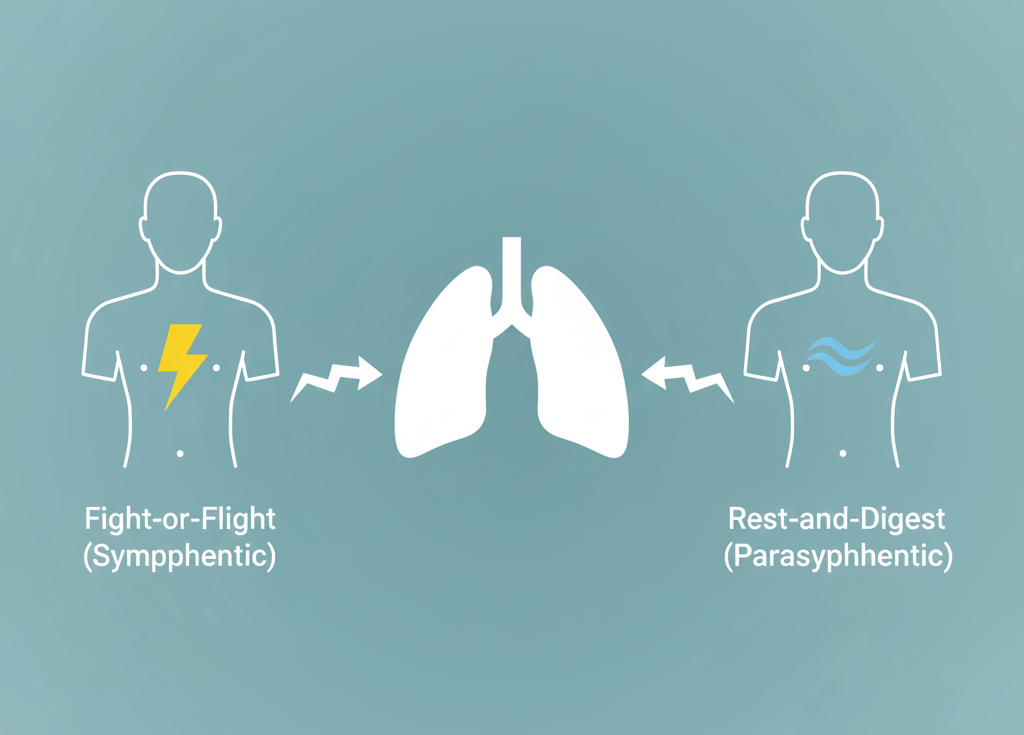
Here’s the simple science that changed everything for me. Your body has two main settings: fight-or-flight (sympathetic nervous system) and rest-and-digest (parasympathetic nervous system). When you’re stressed, anxious, or lost in thought, you’re in fight-or-flight. Your heart races, muscles tense, mind fixates on threats.
Slow, mindful breathing is like finding the switch. It tells your body, “Hey, we’re safe. You can stand down.” It lowers cortisol (the stress hormone), slows your heart rate, and flips you into rest-and-digest mode. You’re not just thinking yourself calm; you’re biologically initiating calm.
But beyond the physiology, there’s a beautiful psychological truth. Your mind can time-travel. Mine is a champion at it, replaying yesterday’s awkward conversation, pre-writing tomorrow’s difficult email. The only place it can’t go when it’s truly anchored in sensation is the past or future. The feeling of cool air entering your nostrils? That’s a sensation now. The gentle rise of your belly? That's it for now. By placing your attention there, you give your busy mind a concrete, peaceful alternative to its chaotic stories.
I used to replay arguments for hours, each mental loop making me angrier. Breath awareness gave me a gentle pause button. “Thinking,” I’d whisper internally when I noticed the story starting again, and I’d feel the next exhale. It wasn’t about suppressing the thought, but about choosing a softer place to rest my attention.
"For a really clear breakdown of how this works day-to-day, I highly recommend checking out Understanding Your Nervous System."
How to Practice Breath Awareness: A No-Fuss, Beginner-Friendly Guide
Okay, let’s get practical. You don’t need to sit in the lotus position for an hour. You don’t need to clear your mind (an impossible task!). You just need a few minutes and a willingness to be gently curious.
Step 1: The Simple Setup
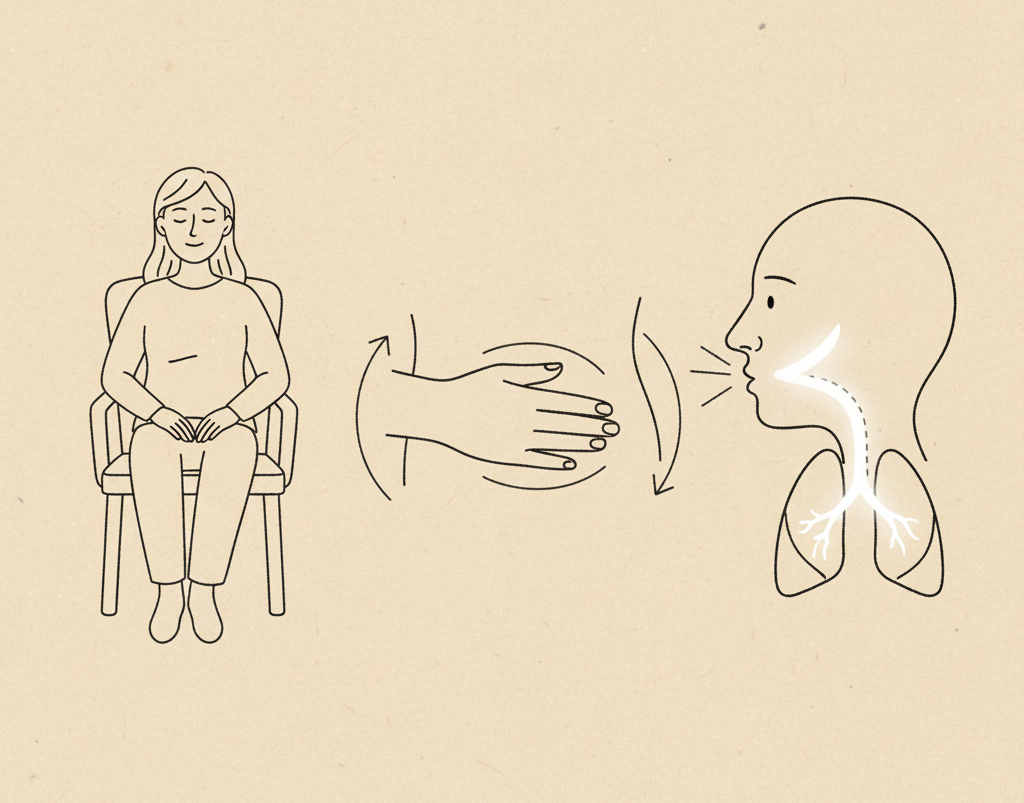
Find a relatively quiet spot where you won’t be interrupted for five minutes. Sit in a chair with your feet flat on the floor, or lie down. Wear loose clothing. That’s it. No incense, no chanting, no special equipment required (though a supportive meditation cushion can make sitting more comfortable for beginners, more on tools later).
Set a gentle timer for 5 minutes. The goal isn’t to endure; it’s to explore.
Step 2: Find Your Anchor Point
You don’t have to focus on your “whole breath.” Pick one sensation. Try these on and see what feels most natural:
- The Rise and Fall: Place a hand on your belly. Feel it expand softly on the inhale, retreat on the exhale.
- The Gateway: Feel the cool air as it enters your nostrils, and the slightly warmer air as it leaves.
- The Sound: Listen to the subtle whisper of your breath, like waves on a shore.
Choose one. This is your anchor point. Your home base.
Step 3: The Gentle Return (This is the Whole Practice)
You will get distracted. I still do, every single time. A thought about dinner, a noise outside, a memory. This isn’t failure. This is the practice.
When you notice your mind has wandered (and you will, that moment of noticing is your mindfulness!), don’t scold yourself. Simply label it softly: “thinking,” “planning,” “remembering.” Then, with kindness, guide your attention back to your chosen anchor point. The coolness at the nostrils. The rise of the belly.
Each return is a repetition. It’s like a bicep curl for your attention muscle. The magic isn’t in never leaving the anchor; it’s in the faithful return.
Step 4: Your 5-Minute Daily Practice Script
Let’s put it all together. Read this once, then set your timer and try it.
Timer set. Sit comfortably. Feel your feet connecting with the floor. Let your hands rest, palms open. Gently close your eyes or soften your gaze downward.
Bring your attention to your body. Notice any sensations... weight, temperature, contact.
Now, guide your attention to your breath. Don’t change it. Don’t force it. Just notice it arriving... and leaving. In... and out.
Choose your anchor point. The belly rising... and falling. Or the air at the tip of the nose. Rest your attention there.
Breath arrives. Breath leaves. Rising. Falling. Cool in. Warm out.
When you find yourself thinking, planning, or lost in a story, smile inwardly. You’ve remembered! Gently say “thinking” and escort your attention back to the breath. To the rising. The falling.
Continue like this until your timer rings. Then, gently open your eyes. Notice how you feel. No judgment, just observation.
That’s it. That’s the core practice. For a deeper dive into structured practices, you might enjoy my Morning Meditation Scripts.
Weaving Breath Awareness Into Your Day
The real transformation happens when you step off the cushion and into your life. This isn’t just a seated practice; it’s a lifeline you can use anywhere.
Here are a few of my favorite “micro-practices”:
- The STOP Practice: Before hitting send on a tense email, or reacting to a provocation: Stop. Take one conscious breath. Observe what you’re feeling in your body. Proceed with more awareness.
- Traffic Light Breath: Every red light is a gift. Use it to take one full, mindful breath. Inhale for four, exhale for six. It transforms frustration into moments of peace.
- The Hourly Reset: Set a soft chime on your phone or computer every hour. When it rings, pause for three conscious breaths. Feel your feet on the ground. It’s a system reset for your nervous system.
Pairing this with movement is incredibly powerful. I often combine it with a Mindful Walking practice, feeling the breath and the steps together creates a double anchor.
And if you’re like me and love to reflect, keeping a simple, beautiful journal nearby to write down what you notice after a breathing pause can deepen the insights. “After three breaths, I realized I was clenching my jaw.” That’s valuable self-knowledge.
Tools to Support Your Journey
While you need nothing but your lungs, a few supportive tools can make your practice feel more anchored and enjoyable. (A quick note: Some links below are affiliates. Purchases may earn me a small commission at no extra cost to you. I only recommend what I’ve truly used and loved.)
For Comfort and Posture:
- A traditional buckwheat zafu meditation cushion tilts your pelvis forward, making a tall, relaxed spine effortless.
- A sturdy yoga mat defines your practice space, even if it’s just a corner of your bedroom.
For Knowledge and Guidance:
- Books: Thich Nhat Hanh’s The Miracle of Mindfulness is a gentle, profound manual. Jon Kabat-Zinn’s Wherever You Go, There You Are grounds mindfulness in everyday life.
- Apps: For a vast library of free guided breath meditations, I love Insight Timer. For a more philosophical, in-depth course on awareness itself, Sam Harris’s Waking Up app is exceptional.
For Atmosphere:
- Creating a sensory cue can help. A few drops of lavender in a simple essential oil diffuser can signal to your brain, “It’s time to settle.”
For completely free, scientifically-backed resources, I always point people to the excellent UCLA Mindful Awareness Research Center. Their free guided meditations, including body scans that focus on breath, are a treasure.
When Breath Awareness Feels Hard: Your Questions Answered
“My mind won’t shut up. I’m distracted constantly.”
Congratulations, you have a normally functioning human mind! Distraction isn’t the enemy; it’s the raw material of your practice. Every time you notice you’re distracted and return to the breath, you’ve done the work. That is the workout.
“Focusing on my breath makes me feel anxious or short of breath.”
This is more common than you think. If controlling the breath triggers anxiety, switch your approach. Instead of focusing on the inhale, place all your gentle attention on the exhale. The exhale is naturally relaxing; it activates the rest-and-digest system. Just follow each out-breath all the way to its natural end, and let the inhale happen on its own.
“When will I see benefits?”
There are two layers: immediate and long-term. The immediate benefit is the pause itself. That one breath at the red light is a moment of non-reactivity, a tiny space of peace. The long-term benefit is like water shaping stone. Over weeks and months of practice, you rewire your brain’s default from reactivity to responsiveness. You create a gap between stimulus and reaction, and in that gap lies your freedom.
Your Breath, Your Anchor
This practice isn’t about adding one more thing to your to-do list. It’s about remembering a resource you’ve always had. Your breath is always here, in the present tense. It’s your built-in homing device.
That cliff-edge feeling from last Tuesday? It comes back sometimes. But now, more often than not, I feel the anchor before I feel the fall. A hand on my belly. One conscious breath. The cool air at my nostrils. I’m back. I’m here.
Your next inhale is a chance to come home. You don’t have to wait for the perfect moment. The perfect moment is this one, already filled with the rhythm of your own life.
Try it right now. Before you scroll away. One full cycle. Inhale… and exhale. What did you notice?
Found this helpful? You might also enjoy reading about Common Mindfulness Obstacles, exploring a simpler approach with Zen Meditation, or discovering how to create Your Everyday Altar to honor these small, sacred moments.


Comments (0)
No comments yet. Be the first to comment!
Leave a Comment