
Table of Contents
The Art of Being Present in a Distracted World: A 2026 Survival Guide for the Human Soul
Check your wrist. Did it just buzz?
Mine did. It's scolding me: "You've been sitting too long."
But here's the funny part, while my body's been still, my mind has been bouncing everywhere. One minute I'm thinking about milk I forgot to buy. Next, I'm worried about a work deadline. Then I feel like I should be doing something better.
Three screens are glowing around me. Somewhere in the cloud, an AI is probably waiting to tell me how to live my life better.
Here's the messy, beautiful, frustrating truth I've learned: in a world engineered for our constant, fractured attention, the simple act of being present isn't a spiritual luxury. It's a radical act of rebellion. It's how we stay human.
I used to think presence was for other people, the serene folks in linen pants. I'd try to meditate, and end up mentally drafting emails, my to-do list scrolling behind my closed eyelids like a news ticker. I was connected to everything, except the moment I was actually living in.
Then, a few years ago, in a bustling Kathmandu courtyard, I saw something that rewired my understanding. Amidst the whirl of tourists, spinning prayer wheels, and the scent of incense and dust, an elderly practitioner sat at the base of the great Boudhanath Stupa. His eyes were half-closed. His breathing was a visible, rhythmic tide in his body, deep, slow, and unwavering. The chaos flowed around him like a river around a stone. He was there. Completely. I realized I wasn't looking at peace as an abstract concept. I was looking at a skill. An art. One that's more urgent to learn in 2026 than ever before.
This guide isn't about adding another "should" to your list. It's about weaving ancient, time-tested wisdom, drawn from the Zen monasteries of Japan to the Himalayan paths of Nepal, into the fabric of your modern, buzzing life. These are five practices that have become my anchors. Let's build yours.
1. Why "Now" is Your Only Real Address (And How to Move In)
Our minds are beautiful, terrible time-travel machines. We spend most of our lives nostalgically replaying the past or anxiously pre-living the future. The present? It's often just a blurry station we speed through on the way to somewhere else.
The neuroscience is clear: this default mode is a recipe for stress. But the philosophy is even simpler: the past is a memory. The future is a fantasy. The present moment, this breath, this sensation, is the only place where life is actually happening. You can't change a past moment or control a future one from anywhere but now.
My first real, unglamorous taste of this wasn't on a meditation cushion. It was at my kitchen sink. Hands in warm, soapy water, I made a decision: for just these three plates, I would only wash dishes. I felt the slippery ceramic. I heard the specific clink as I set one in the rack. I watched the bubbles pop. And for about 90 seconds, the frantic mental chatter stopped. The anxiety about tomorrow's meeting just… vanished. It was a profound lesson: presence isn't about adding something. It's about subtracting everything that isn't here.
The mind will rebel. It's its job. If you find yourself racing with "I can't do this," you're in good company. We have a whole guide on Overcoming Meditation Obstacles that tackles that very struggle. The research from places like the Greater Good Science Center backs this up; this gentle returning is the practice. It's the repetition that builds the muscle.
2. Your Portable Anchor: The Himalayan Breath
Let's talk about the most powerful, always-available tool you have: your breath. In Nepali and Tibetan traditions, breath (prana or lung) isn't just air. It's the vehicle of life force and awareness. That practitioner at Boudhanath? He was using his breath as an anchor, tethering his wild mind to the steady rhythm of his body.
You don't need a stupa. You can do this in a traffic jam, in a tense meeting, or while waiting for a download.
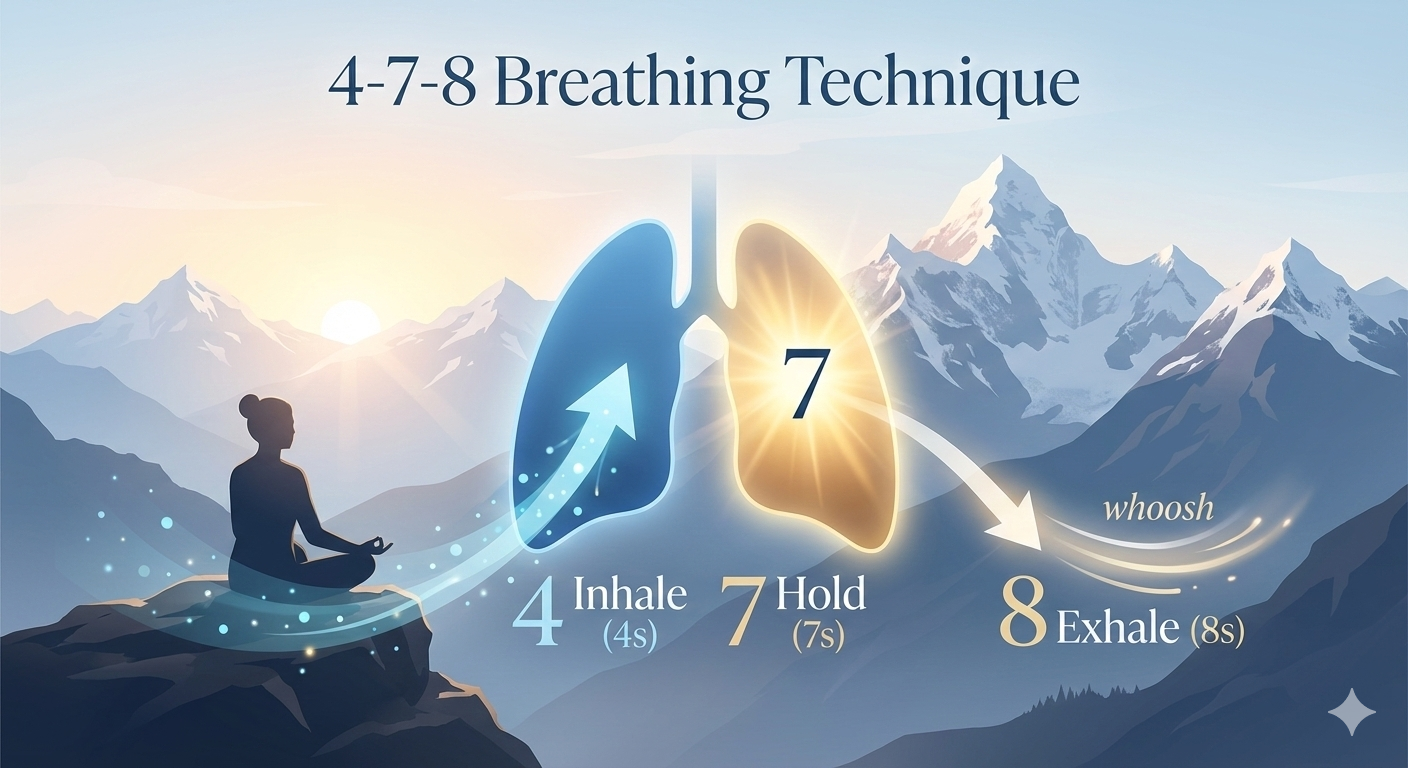
Try the 4-7-8 Breathing Exercise (Your On-the-Spot Reset):
Inhale quietly through your nose for a count of 4. Feel your belly expand.
Hold your breath for a count of 7.
Exhale completely through your mouth, making a gentle "whoosh" sound, for a count of 8.
That's one cycle. Do four. It's like a manual override for your nervous system. It tells your body, "We are safe. We are here." It forces your mind to focus on counting, pulling it out of its storytelling spiral. For a deeper dive into making this a foundational practice, our Breath Awareness: Your Simple Anchor to the Present guide is your next step.
3. From Temple Bells to Your First Sip: The Power of Micro-Rituals
Here's a contrast that changed my perspective. In a village in the Annapurna foothills, the day begins with the resonant gong of a temple bell. Morning chores, lighting the fire, and fetching water are done with a deliberate, mindful pace. There's an inherent rhythm, a participation with the day.
In our world, we often assault the day. The alarm shrieks. We check the phone before our eyes fully focus. We multitask breakfast. We're in a state of reaction before we've even left the house.
We can bridge these worlds by creating mindful micro-rituals. These are tiny, intentional pauses that bookend the chaos.
Your "First Sip" Mindfulness Ritual:
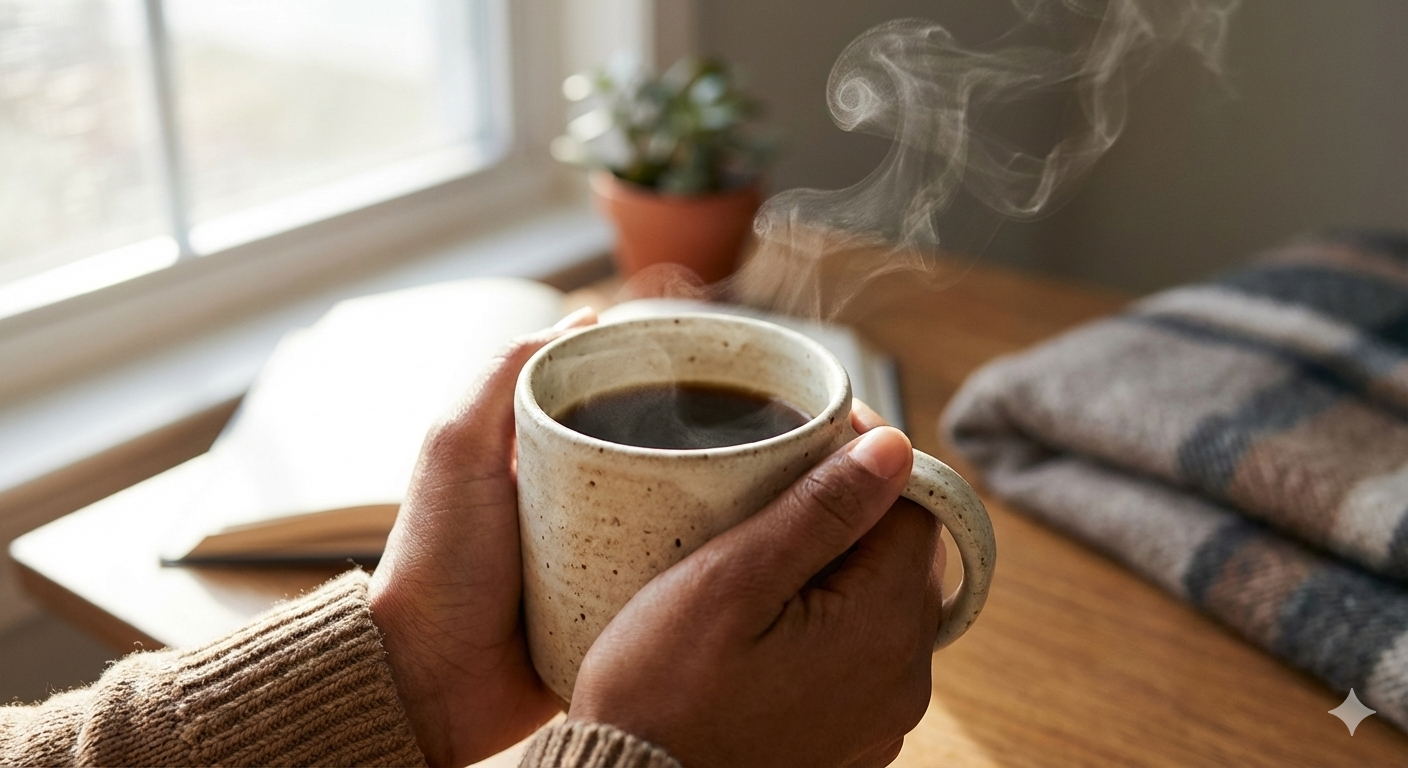
Tomorrow, before you drink your morning coffee or tea, stop for 60 seconds.
Hold the cup. Feel its warmth, its texture. Is it smooth ceramic? The gentle roughness of a hand-thrown clay mug (these beautiful, tactile cups remind me of Kathmandu pottery stalls and make the ritual feel special)?
Smell the steam. Let the aroma be the entirety of your focus.
Take the first sip. Let it be just that. Not the first sip while reading a headline. Just the heat, the taste, the sensation of swallowing.
That's it. You've just begun your day from a place of choice, not chaos. You've claimed a moment of being present in a distracted world. For more ways to weave this into your day, from commuting to chores, explore our piece on Mindfulness in Daily Activities 2026.
4. The Radical Act of "Just Sitting": Zen and Himalayan Stillness
We are a culture of human doings. Our value is often tied to our output. So, the practice of non-doing, of just sitting, feels radical, uncomfortable, and utterly essential.
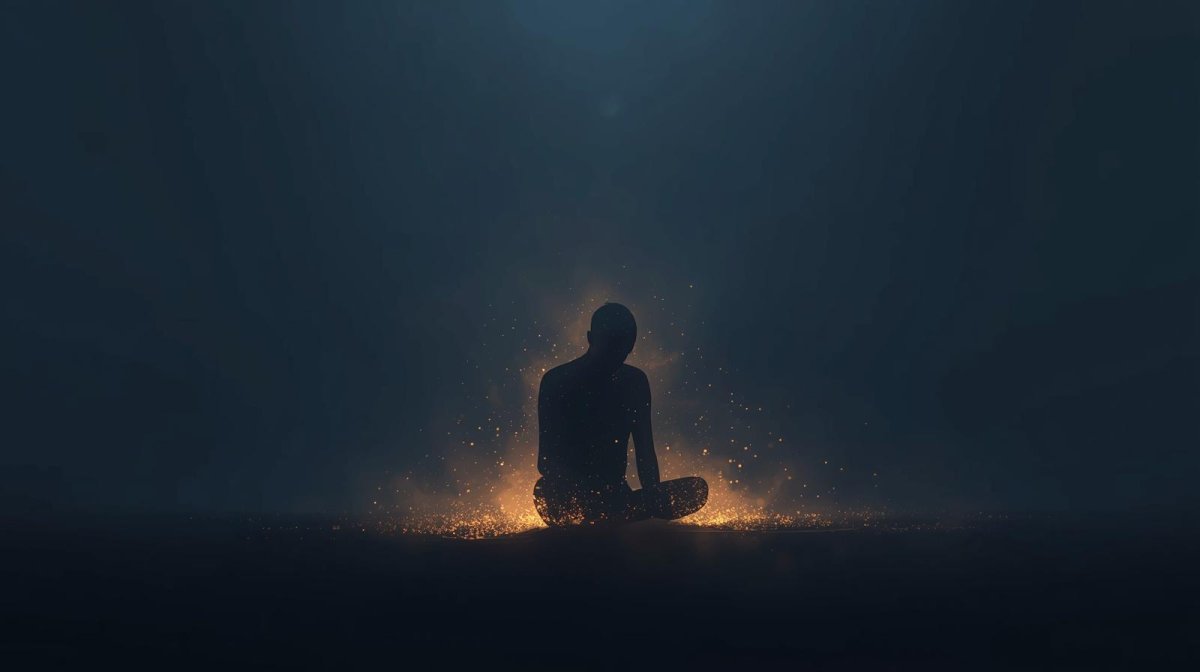
In Japan, they call it Zazen. Literally, "sitting meditation." The instruction is deceptively simple: sit, spine upright, and be aware. Don't chase thoughts. Don't fight them. Let them be clouds passing in the vast sky of your awareness. In the monasteries around Kathmandu, like Kopan, a similar practice called Shamatha ("calm abiding") is taught. It's about letting the mind rest in its natural state, without fabrication.
Your practice doesn't need a fancy name. Here's how to start:
Set a timer for 5 minutes.
Sit on a chair, cushion, or your bed. Just get reasonably upright (no need for a full lotus!).
Gently lower your gaze or close your eyes.
Feel the points of contact: your sit bones on the seat, your feet on the floor.
Now, just sit. When you notice your mind has gone planning or worrying (and it will, a thousand times), gently, without judgment, return to the feeling of sitting. The breath is a good anchor point to return to.
That's the whole game: noticing you've drifted, and coming back. Every return is a rep for your present moment awareness muscle. For a full, supportive walkthrough, our Zen Meditation: Sitting in Stillness guide is there for you.
5. Walking as Meditation: Shinrin-Yoku and the Nepali Kora
Presence doesn't always mean stillness. Some of my most profound moments of overcoming distraction have come while moving.
In Japan, Shinrin-yoku, or "forest bathing," is the practice of walking slowly, immersively in nature, engaging all five senses. There's no destination. The purpose is to be in the forest.
In Nepal, pilgrims practice Kora, the mindful circumambulation of a sacred site like the Swayambhunath Stupa. Each step is a prayer, a moment of connection. They aren't getting to a place; the walking itself is the place.
You can do this anywhere.
On your next walk, leave the headphones in your pocket.
Feel the swing of your legs, the roll of your foot from heel to toe.
See the colors of the leaves, the play of light and shadow.
Hear the layered sounds: birds, distant traffic, your own breath.
Be a forest bather in an urban jungle. It's all about the quality of your attention. For a structured approach, our Walking Meditation: The Complete Guide offers beautiful techniques.
Becoming the Spiritual Nomad in Your Own Life
So here we are. In a world of infinite pull, you now have a map back to yourself.
Your breath is an anchor you always carry.
A simple ritual can ground a chaotic day.
Just sitting teaches you that you are not your thoughts.
A mindful walk can turn the ordinary into the sacred.
This isn't about achieving a state of permanent, blissful zen. That's a fantasy. It's about the gentle, persistent return. Distraction will pull you. Your phone will ping. Your mind will spin a new worry. The art is in the noticing, and in the loving choice to come back, to the breath, to the sip, to the step.
You are not learning presence. You are remembering it. It's the deepest memory you have, the state you were born in before the world started buzzing.
Which of these practices calls to you today? Try just one. The "First Sip" ritual. Four cycles of 4-7-8 breath. A five-minute "just sit." Then, I'd love to hear about it. Share your experience in the comments below.
Remember, the spiritual journey isn't about traversing exotic landscapes. It's about arriving, fully and completely, right where you are. Your life, this moment, is the most sacred ground you will ever walk on. Let's start by feeling it under our feet.
Some links in this guide are affiliate links. Purchases made through them provide a small commission that supports Spiritual Nomad and our mission, at no extra cost to you. I only ever recommend tools and resources I genuinely use and love. For quality meditation cushions and mindfulness journals, I recommend checking trusted suppliers.
Comments (0)
No comments yet. Be the first to comment!
Leave a Comment