Table of Contents
Ego Death: What It Really Feels Like When a Seeker’s ‘I’ Dies
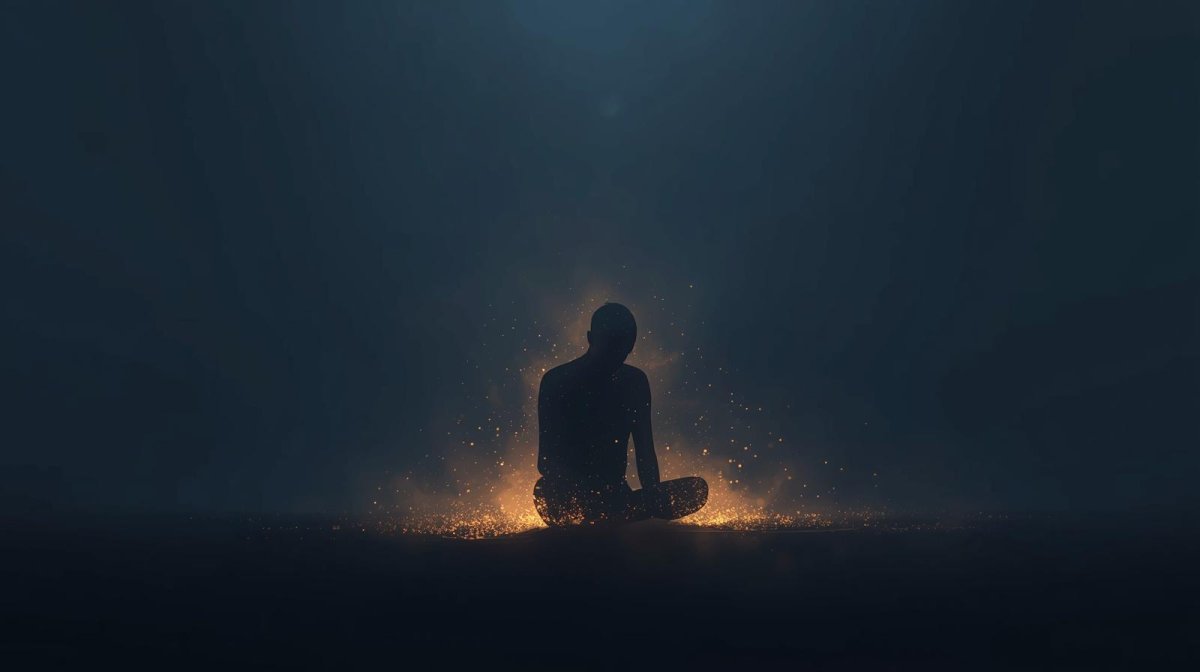
It doesn’t always feel sacred or transcendent when the boundaries of the self begin to soften and fade. In fact, for many people, the experience of ego dissolution, whether brought on by meditation, trauma, psychedelics, or deep psychological shifts, can be profoundly disorienting. Instead of blissful unity, it may arrive as a sudden wave of panic, your heart racing because the familiar anchor of “I” is no longer holding steady. Other times, it surfaces as grief, a quiet, aching sense that something essential has been lost, even if you cannot name what that something is. And then there are the moments that feel eerily ordinary: you are standing in a room you have known for years, your bedroom, your kitchen, your usual morning coffee spot, but something fundamental has shifted. The inner voice that used to narrate your day, that constant commentator labeling your thoughts, judging your actions, telling your story, has fallen strangely silent. You cannot recall when the silence began. It might have been minutes ago, or hours, or weeks. And that inability to trace the absence only deepens the unease, leaving you to wonder whether you ever really knew who was speaking in the first place.
A lot of seekers come to ego death expecting a cosmic firework show. Maybe a white light. Maybe a dramatic fall to the knees. But here’s the strange part: more often, it feels like a quiet, terrifying unplugging. The voice in your head that said I’m doing this, I want that, I’m not good enough yet, suddenly stutters. Then stops.
And what’s left isn’t bliss. It’s a strange, hollowed-out stillness. And that stillness can scare the hell out of you.
If you’re reading this because something inside you is cracking open, or has already fallen apart, you’re not broken. You’re not losing your mind. You might just be losing the only version of yourself you ever knew. And that’s a whole different kind of frightening.
Let’s talk about what ego death really feels like. Not the poetic version. The real one.
Ego Death Is Not Just a Spiritual Buzzword
Let’s be clear about something from the start. The ego is not the bad guy. It’s not some arrogant enemy hiding inside you that you have to fight, destroy, or get rid of. That’s a misunderstanding. In fact, treating the ego like a villain usually just creates more confusion and self-judgment.
Think of your ego instead as a small, hardworking contractor. A builder. A very young one, maybe, but dedicated. And what did this builder do? It built the house you’ve been living in your whole life. Not a physical house, but a mental and emotional one. That house is everything you call “me.” Your name. The story of where you came from. Your likes and dislikes, why you love tea but not coffee, why you feel proud of some things and ashamed of others. Your little habits and your big fears. The walls you put up when you feel hurt. The face you show to different people. All of that was built by your ego, brick by brick, over many years.
And here’s the important part: that builder wasn’t trying to trap you. It was trying to protect you. It kept you safe when you were young and didn’t know how the world worked yet. It helped you fit in, get along, survive school, please your parents, avoid pain, and earn love. It helped you function as a person in a very complicated world. Without that builder, you would have been lost.
So don’t hate your ego. Thank it. But also remember: you don’t have to stay locked inside the house, it was built forever. You can open the windows. You can step outside and breathe. The builder did its job. Now you get to choose how to live.
But that house has a habit of getting cramped.
Ego death is just a fancy name for something very simple and very human. It happens when the walls of the house you’ve built for yourself, your identity, your labels, your story about who you are, stop feeling like safety and start feeling like a cage. You wake up one day and realize that the same thoughts you’ve been thinking for years, the same fears, the same pride and shame, have become a kind of prison. And you didn’t even notice when the door locked.

Then something happens. Life steps in. Maybe it comes through meditation, when you sit still long enough to see that your mind is just making noise. Maybe it comes through grief, after losing someone or something that held your whole world together. Maybe through plant medicine, or what old stories call a night of the soul, a long, painful time when nothing makes sense anymore. Or maybe it just happens slowly, after years of being honest with yourself, trying to grow a little at a time.
And in that moment, life gently pulls the blueprints out of your hands. The blueprints are all the ideas you had about how you should be, what you needed to prove, and who you had to become to be loved or safe. And life doesn’t yell at you. It just quietly says, “Look closely. This plan you’ve been following? This image of yourself you’ve been defending? This was never really you. It was just a shape you borrowed. You can put it down now.”
That is ego death. Not an ending, but a loosening. Not a loss of yourself, but a return to something bigger and quieter underneath.
Crucially, ego death is not the same as dissociation, depression, or nervous system collapse. Dissociation numbs you out. Depression tells you nothing matters. Ego death, as destabilizing as it feels, is actually a kind of clarity: the sudden, undeniable recognition that the voice in your head is not the whole of you. It’s just a voice. And it just went quiet.
If you’re in severe distress, unable to eat, sleep, or function, please get real-world support. Spiritual awakening and mental health crises can look similar, but they are not the same. This article is a spiritual reflection, not medical advice.
But if you’re simply terrified because the familiar “you” is fading? Keep reading.
The Inner Landscape When the Old Self Falls Away
So what does ego death feel like? Let me walk you through the rooms most people actually visit.
1. The panic of unhooking from identity.
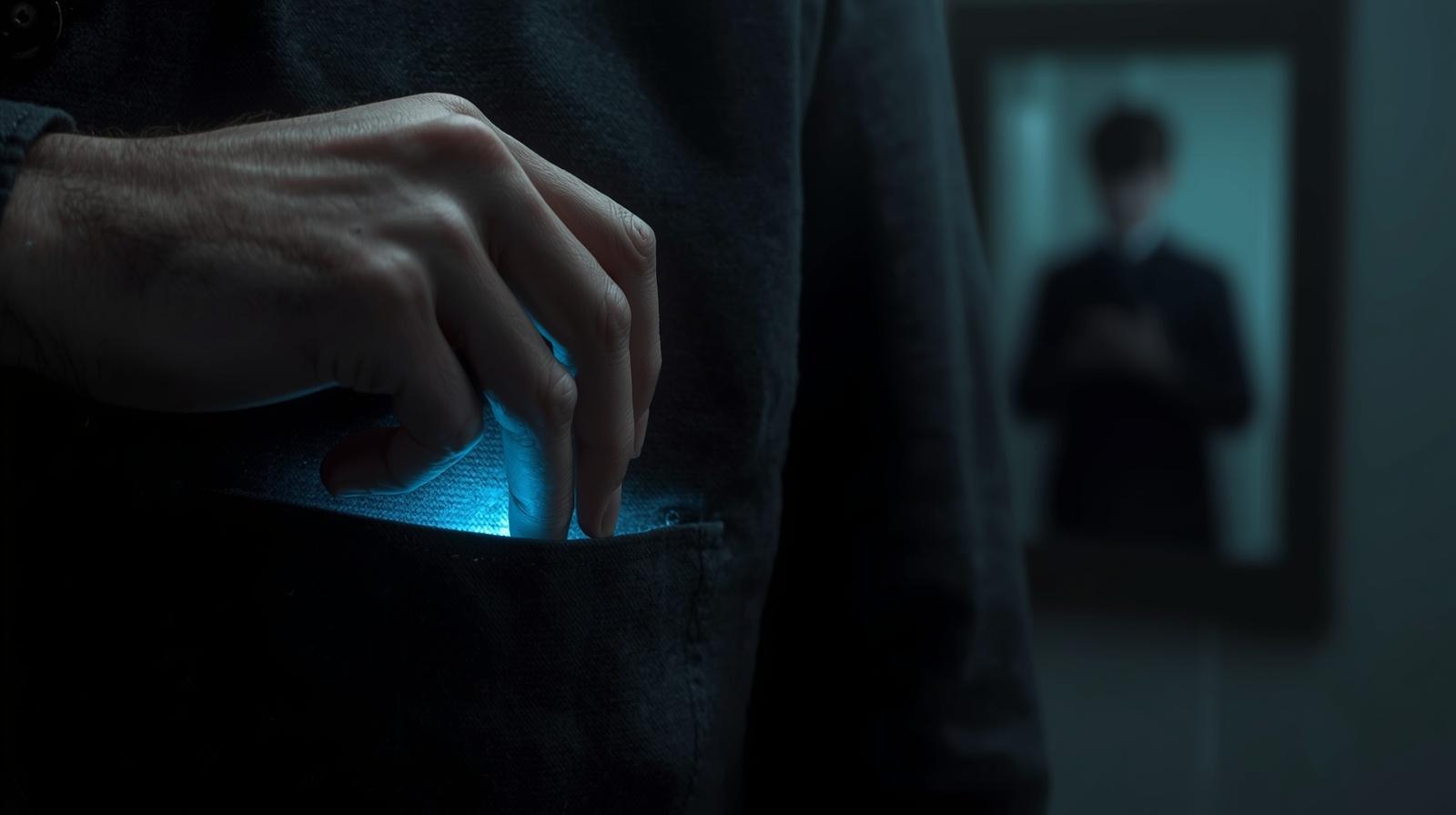
You know that feeling when you reach for your phone and your pocket is empty? It’s like that, except the thing missing is you. Who are you without your opinions? Without your job title, your wound story, your spiritual progress report? For a moment, there’s no answer. And the mind hates that. It will thrash. It will whisper, “You’re disappearing. Get it back.”
This is the hardest part. Not because it’s painful in a sharp way, but because it’s terrifying in an existential way. You realize you’ve been holding onto a mask so tightly that your face forgot it was underneath.
2. The grief of losing familiar stories
Here’s something no one warns you about: you will grieve the self you hated. Even the parts you wanted to change, the anxious striver, the people-pleaser, the angry one, they were yours. Losing them can feel like losing a dysfunctional but familiar roommate. You don’t miss the mess. You miss the company.
I’ve sat with people who wept for days because they no longer felt like “the one who overcame everything.” That story had carried them for years. And now it was just… a story. The grief is real. Let it come.
3. The relief of no longer performing
And then, out of nowhere, a strange window opens. You realize no one is watching. The inner audience has left the theater. For the first time in maybe decades, you’re not performing spiritual growth. You’re not trying to be more enlightened, more healed, more present. You’re just… here.
That relief is so quiet you might miss it. It’s not a euphoric high. It’s more like taking off a pair of shoes that have been two sizes too small for years. The absence of pain can feel like nothing at first. But then you notice: oh. My feet don’t hurt anymore.
4. The fear of not being in control
Let’s be blunt: ego death is bad for control freaks. And most seekers are secret control freaks. We meditate to manage our anxiety. We do shadow work to fix ourselves. We chase awakening because we think it will finally make us feel safe.
But the collapse of the “I” pulls the rug out from under the one who wanted to be in charge. You can’t manage your way out of this. You can only surrender. And for a mind built on managing, surrendering feels like drowning.
It’s not drowning. It’s learning to float. But your ego won’t believe that until you’ve done it a few hundred times.
Why Ego Death Often Comes to Spiritual Seekers
You’ve been doing the work. Meditating. Journaling. Sitting in retreats and reading the books. And instead of feeling more together, you feel like you’re coming apart.
That’s not a bug. That’s a feature.
Here’s why: spiritual practice, when it’s real, doesn’t build a better ego. It slowly, sometimes ruthlessly, reveals that the ego was never solid to begin with. It was always a collection of borrowed ideas, conditioned reactions, and survival strategies. And at a certain point, the truth just gets tired of pretending.
Modern life makes this worse, or better, depending on how you look at it. We’re exhausted. Digital identity fatigue is real. The pressure to brand yourself, optimize yourself, and perform your personality across six platforms has stretched the ego thinner than ever. No wonder so many of us are hitting a wall and feeling the whole thing crack.
Ego death isn’t a punishment for seeking. It’s what happens when seeking gets honest enough to ask: “But who is the one who’s seeking?”
When that question lands, the seeker starts to dissolve. And that’s the threshold.
What Helps When the Self Feels Unstable
If you’re in the middle of this, you need to get on the ground. Not philosophy. Ground.
Here’s what actually helps:
- Slow your breathing. Not as a mystical practice, just as a mechanical reset. Five seconds in, five seconds out. Your nervous system needs the memo that you’re safe.
- Eat something regularly. Rice. Soup. Toast. The body is an anchor. Feed it.
- Walk outside. No goal. No spiritual intention. Just feet on earth, lungs moving air.
- Reduce stimulation. No doomscrolling. No intense podcasts about non-duality. Your brain is remodeling; don’t shout at the contractors.
- Journal without forcing meaning. Not “what does this mean?” Just “right now, I feel…” Let it be messy.
- Talk to one trusted human. Not to fix anything. Just to say, “I don’t know who I am anymore.” You’d be shocked how many people have been there.
- Avoid spiritual grandiosity. If you start thinking you’re more awakened than others, or that normal life is beneath you now, pause. That’s just the ego wearing a monk’s robe.
- Rest more than you think you need. Identity collapse is exhausting. Sleep is not avoidance. Sleep is repair.
And one more time: if you’re having thoughts of harming yourself, or you cannot function for weeks, please reach out to a mental health professional. Ego death is not supposed to destroy your ability to live.
What Can Grow After the “I” Softens
So what’s on the other side? Not what you think.
You don’t become a permanently blissed-out floating orb. You don’t lose your personality or stop caring about anything. What actually happens is quieter, and in some ways, more beautiful.
People who’ve moved through ego death often describe:
- Less defensiveness. You don’t need to protect a self that doesn’t feel so solid.
- Deeper presence. Not the performative kind. Just the simple ability to listen without rehearsing your response.
- More tenderness. When the walls come down, you feel more, not less. Including other people’s pain. Including your own. Including the strange, heartbreaking loveliness of an ordinary Tuesday.
- Less performative spirituality. No more needing to seem enlightened. You might even laugh at the whole thing.
- A quieter relationship with life. The constant inner narrator goes from a screaming manager to a whisper, then sometimes to silence. And silence, it turns out, is not empty. It’s actually quite full.
Ego death does not make you special. It does not make you finished. It does not hand you a certificate of ultimate awakening. What it does is clear away some of the clutter so that life, real, unscripted, messy life, can breathe through you more easily.
And that’s enough. That’s more than enough.

The Death That Makes Space for Life
What dies in ego death is not your worth. Not your soul. Not your capacity to love or laugh or cry at a sad movie. What dies is the cramped little story that tried to contain all of you. The one that said “I should be further along,” and “I need to fix this part of myself first,” and “When I finally wake up, then I’ll be okay.”
When that story loosens, something unexpected happens. You realize you were already okay. Not in a smug, spiritual-bypass way. In a quiet, unglamorous way. The same way a tree is okay before it knows it’s a tree.
If you’re in the middle of losing your “I,” I know it’s terrifying. I know it feels like death. But pay attention to what’s not dying. The awareness that’s reading these words. The simple fact that you’re still here, still breathing, still somehow caring enough to wonder what’s true.
That’s nothing. That might be the only thing that was ever really you.
The ego dies. You don’t. And what comes next is softer than you think.
FAQ: Short Answers for the Overwhelmed Seeker
What does ego death feel like in one sentence?
Like the person who used to run your inner life went quiet, and you’re left with a strange, scary, and eventually peaceful stillness.
How long does ego death last?
For some minutes. For others, weeks or months. The acute collapse fades, but the shift in how you relate to identity often stays.
Is ego death dangerous?
It can be destabilizing. If you have a history of psychosis or severe trauma, proceed with support. For most seekers, it’s safe but uncomfortable, like emotional surgery without anesthesia.
Is ego death the same as awakening?
No. It’s often a doorway into awakening, but awakening is broader. Ego death removes the obstacle of the false self. What wakes up after that is something else entirely.
This article is a synthesis of spiritual reflection, personal insight, and practical guidance. It is not a substitute for professional mental health support. If you’re struggling, please reach out to a therapist or counselor.



Comments (0)
No comments yet. Be the first to comment!
Leave a Comment