Table of Contents
The Lost Art of Being Here: A Practical Guide to Present Moment Awareness
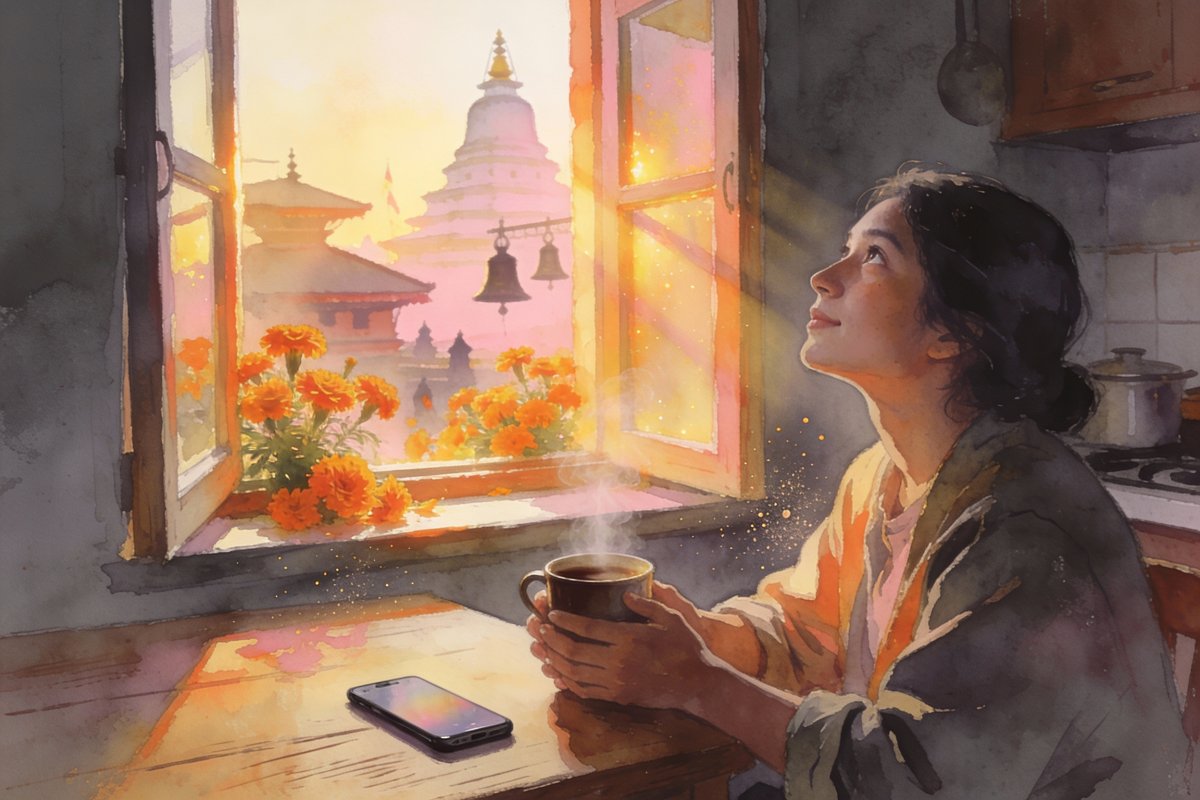
This morning in my kitchen, I tried to enjoy my coffee, but halfway through the cup, I realized I hadn't tasted a single sip. My hand kept reaching for my phone, as if it had a mind of its own, flicking through screens. Outside my window, the morning puja bells from temples were ringing, and sunlight was hitting the marigolds on my sill in that perfect, golden-hour way. I missed all of it. My mind was already in a meeting that hadn't started, drafting emails, and vaguely worrying about headlines I'd pretended to read.
Sound familiar?
When was the last time you were truly where you were? Not halfway between a conversation and your mental to-do list, not physically in a room but mentally scrolling, but fully, completely present? Not planning, regretting, or anticipating, but simply experiencing?
That is what we are discussing here: present-moment awareness. It's not a mystical state reserved for monks on mountaintops (though we can learn from them). It's the gentle, radical act of paying attention to what's happening right now, without the many open tabs in your head. In a world that sells us hustle, hyper-connection, and endless stimulation, this simple presence has become a survival skill. It's the practical antidote to digital overwhelm, the low-grade anxiety, and the soul-deep burnout that hums in the background of modern life.
This is not about forcing yourself to meditate perfectly. Believe me, I've tried some days, my mind won't settle. And that's okay. Instead, think of this as a toolbox of small, simple habits. It is for anyone whose focus feels scattered by notifications and noise. It's about reconnecting with your own attention, the one thing you truly own, right here, right now.
Why It Feels So Damn Hard to Just Be Here (The Modern Attention Crisis)
Let's be honest: our environment is practically engineered to keep us anywhere but the present. We are living in a state of constant mental ping-pong. You are watching a show while texting a friend, when your laptop buzzes with a work Slack notification. You're "listening" to a podcast while driving, mentally planning your grocery list. We've bought the myth of multitasking, and the cost is our sanity and our depth.
I call it the "monkey mind on Red Bull." Our attention is not just split; it's been hijacked by design. Every notification, every "ding," is a tiny slot machine pull, an unpredictable hit of dopamine that trains us to seek the next hit, not the current reality. I've literally refreshed social media as if it owed me rent, my finger moving on a muscle-memory loop devoid of any actual desire. You know that restless, itchy feeling.
Here's what's happening in our bodies: when we live in this scattered state, our stress hormone cortisol shoots up. We slip into a reactive, survival mindset, even during a normal scroll. Our ancient nervous systems simply are not wired for hundreds of digital interruptions before breakfast. As the American Psychological Association notes, constant tech use is directly linked to higher stress and poorer concentration. Our brains are shaped by what we do most. And lately, we've been teaching them to be frantic.
The result? We are living in a chronic state of shallow engagement. We skim articles instead of reading them. We half-listen to our partners, our kids, our friends. We walk into a room and instantly forget why because the thought was severed by a buzz from our pocket. This is not a personal failing; it is a design outcome. No wonder sitting quietly with a cup of tea, just being with its warmth and aroma, can feel unsettling, even boring. Our brains have been rewired to crave the frantic flicker, not the steady flame. We've lost what the Japanese call ma—the nourishing space between things.
The "How" – Start Small, Start Now (Micro-Practices, Not Marathons)
Let's be real, most of us are not meditating for an hour in a spotless room. And that is okay. For those of us with messy lives, the real path forward is through micro-practices: simple, small acts of presence. It's not about doing more. It's about remembering how to be where you already are.
1. The 5‑4‑3‑2‑1 Grounding Reset: Your Sensory Anchor.
This is your emergency brake for anxiety spirals or that foggy, disembodied "overwhelm" feeling. It works because it forces your brain to engage with your immediate physical environment, which is always in the now. The next time you feel the mental swirl start, pause and name:
- 5 things you can see (get specific: "the tiny chip in my blue mug," "the shadow of that plant leaf on the wall," "the slow blink of the router light").
- 4 things you can feel (tactile sensations: "the soft fleece of my hoodie," "the cool hardwood under my bare feet," "the weight of my watch on my wrist," "the air moving from the vent").
- 3 things you can hear (listen to the layers: "the distant hum of the fridge," "a dog barking two streets over," "the creak of my chair").
- 2 things you can smell ("the lingering scent of my morning coffee," "the rain on the pavement outside").
- 1 thing you can taste (run your tongue over your teeth: "the last hint of mint toothpaste," or simply "the neutral taste of my own mouth").
It's not about the items themselves; it's about the act of rebooting your senses. It yanks your mind out of the abstract, future, or past and plants it firmly in the tangible, often benign, present. I've used this in a panic in a crowded metro and while frozen at my desk before a big deadline. It's a portable sanctuary.
2. Single‑Tasking as Conscious Rebellion: The Anti‑Multitasking Manifesto.
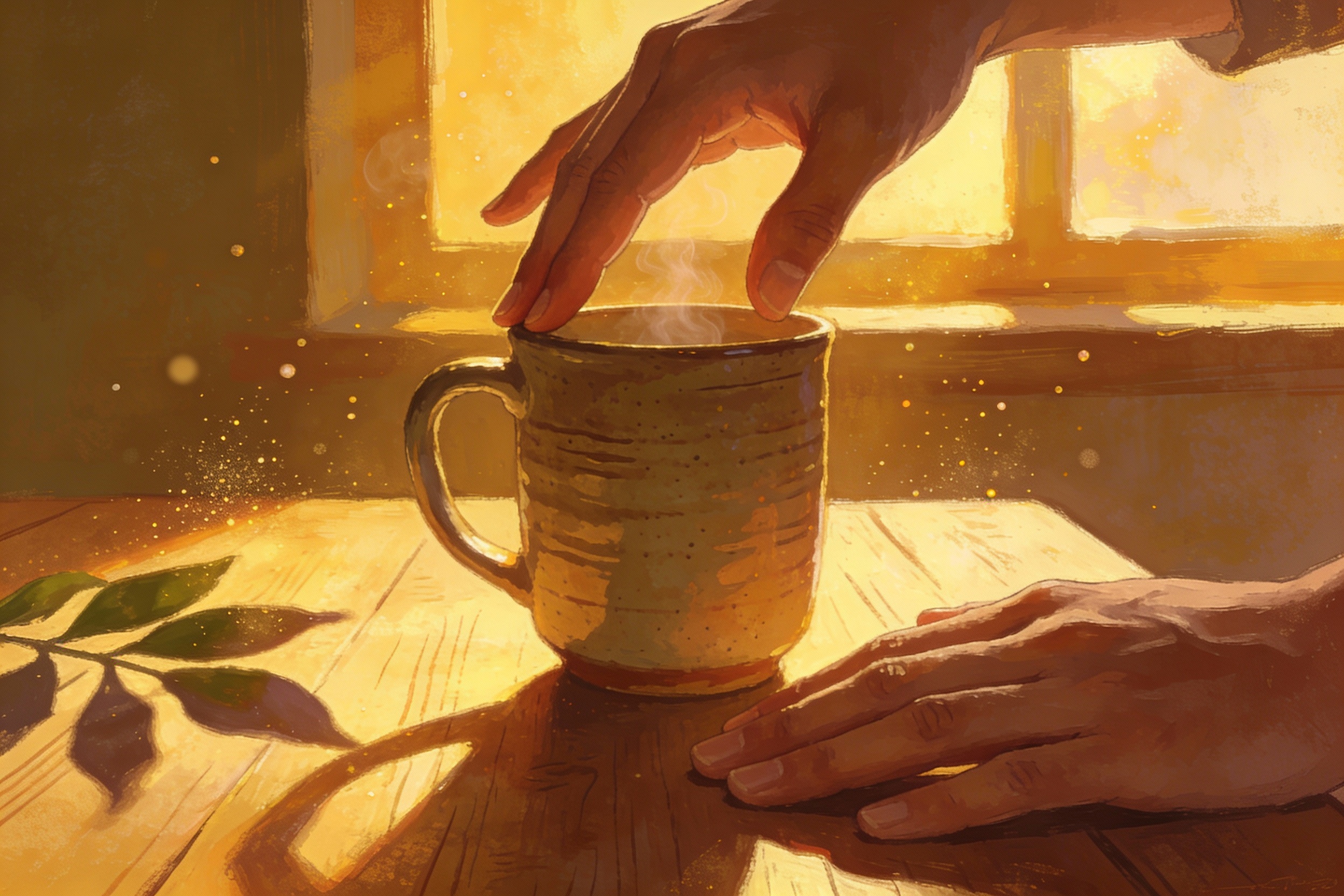
Pick one routine thing. Just one. And do only that with your full attention. Drink your tea, and just drink your tea. Feel the warmth of the cup seep into your palms. Watch the steam curl and vanish. Taste the citrus flavor, the ginger, the subtle mouth-drying feel. When your mind wanders to your email or an old memory, just notice it. Say to yourself, "Planning," or "Remembering." Then, kindly bring your attention back to your tea. Start with five minutes. I promise you, this is harder than a run and more powerful for your mental landscape. It is a direct rejection of the myth that busyness equals worth.
3. Mindful Movement: Walking Your Way Back to Your Body.
Your body is your most reliable anchor to the present; it is always right here. Your mind needs to catch up. In Japan, there's the beautiful practice of shinrin-yoku, or "forest bathing," which is simply the act of being mindfully present in a forest. In Nepal, pilgrims perform kora, the circumambulation of sacred sites, with slow, mindful, meditative steps. You do not need a forest or a stupa. The practice is the principle. Once this week, take a 15-minute walk without headphones. Don't listen to a podcast. Don't make calls. Just walk. Notice three specific details: the sensation of the air on your skin (cool, warm, humid?), the sound of your footsteps (crunchy on gravel, soft on grass?), and the way the afternoon light dapples through leaves or reflects off a window. Feel your body, the swing of your arms, the push-off from your toes. This is not an exercise for calorie burn; it's movement for neural re-wiring. It's a direct line from your buzzing, abstract brain back into your physical, grounded animal self. For days stuck indoors, a simple 5-minute desk-based stretching sequence can serve the same grounding purpose.

4. The Pause‑Button Breath: Creating Space Between Stimulus and Reaction.
This is a tiny, powerful pause. Before you open a new tab, send an angry email, or get sucked into your phone, stop. Take three slow breaths: in through your nose, out through your mouth, making the exhale longer. This triggers your body's calm-down system. That tiny pause creates a space between an urge and your reaction. In that space, you find your choice. It's a free, instant reset button.
Creating a Supportive Environment (Or, How to Make Presence Easier)
Willpower doesn't last. Trying to stay mindful with willpower alone is like holding water in a strainer—it drains fast. A better way is to change your surroundings. Make mindfulness the easiest choice, not the hardest.
Cue Your Practice with a New Morning Anchor:
Start your morning with peace, not your phone. Use a simple analog alarm clock instead. Wake up to quiet, light, or a breath—not notifications. It's a small change that makes the whole day calmer. For a gentle start, try a sunrise alarm clock that mimics dawn.
Create Enforced Tech-Free Zones and Rituals:
Create tech-free zones in your home. Choose places like the dinner table or your bedroom to be phone-free. You can even pick one chair as a quiet reading spot. Before entering, put all devices in a basket. Seeing them put away tells your brain, "This space is for rest or connection." Some families even lock phones away during dinner—a simple basket can do the same.
Employ Tangible, Analog Focus Aids:
Fight digital distraction with satisfying physical objects. A sand timer on your desk creates a visual, un-hackable boundary for a work sprint. Using a simple notebook for brainstorming instead of a Notes app keeps you in a tactile, linear flow, free from pop-ups. Even the warm, dim glow of a Himalayan salt lamp can serve as a gentle, present-moment focal point.
Curate Your Soundscape for Presence:
If silence is too loud or your space is noisy, use sound to help you focus. A small sound machine with steady rain or white noise can block distractions. For a mindful ritual, a Tibetan singing bowl's clear ring can mark the start and end of your meditation or work time; its vibration helps center your attention.
(A crucial, guilt-free note: You don't need to buy a single thing. Use your phone's timer in airplane mode. Use a mug from your cupboard as a "phone jail." Designate a bowl from the kitchen. The principle of intentionality and creating friction for distraction matters infinitely more than any product.)
Beyond the Moment – The Quiet Ripple Effects
This practice of gentle return is not just about snatching three minutes of calm from a chaotic day. It's about the long-term, subconscious rewiring. It's the compound interest of attention paid to your own life.
As you practice coming back to the moment, you will notice a shift. You will listen better, really hearing people instead of just waiting to speak. Creativity will visit more often in the quiet gaps. Stressful moments will pass faster, like a cloud moving on. And a quiet patience will grow in you, steady and deep.
Most importantly, you learn that imperfection is not just part of the path, it is the path. Presence is not a performance; it's a practice, a relationship. You will wander off. A hundred times a day. You will zone out sometimes, like finishing a shower without feeling the water. That's okay. The moment you notice, "Ah, I drifted," is the practice working. The goal isn't to wander. It's to gently guide yourself back, over and over, with kindness instead of criticism. Mindfulness is about noticing more, not being perfect.
The Invitation to Begin (Again, and Again)
So let's circle back to where we started. Right now, as you read these final words, pause for just a breath. Feel the undeniable weight of your body in the chair. The pressure of your feet on the floor. Take one full, nourishing inhale, one slow, releasing exhale. That's it. You're already here. You didn't need an app, an incense stick, or a special cushion. You just needed the intention and a gentle nudge.
This is your permission slip. Every single moment, this one, the next one, the one after you close this tab, is a fresh, open invitation to begin again. The next time your hand reaches for your phone on autopilot, the next time you're eating lunch while staring at a screen, the next time the familiar hum of anxiety starts its background chorus… You have a choice. Not a dramatic, life-altering one, but a gentle, small, profoundly powerful choice to come back. To this breath. This heartbeat. This ordinary, extraordinary second of your one wild and precious life, unfolding in real-time, right outside the endless scroll.
It's the lost art of being here. And the beautiful, hopeful truth is that it's never truly lost, just forgotten. It's patiently waiting in the taste of your next sip of water, the feeling of your keyboard under your fingers, the sound of rain against the window, for you to remember, and to pick it back up.
What's one small or simple way you bring yourself back to the present? I'm always collecting new, real-world micro-practices. Drop your favorite in the comments below. I'd genuinely love to try it.


Comments (0)
No comments yet. Be the first to comment!
Leave a Comment