Table of Contents
Solo Travel as Spiritual Practice: A Journey to Self-Discovery in Nepal
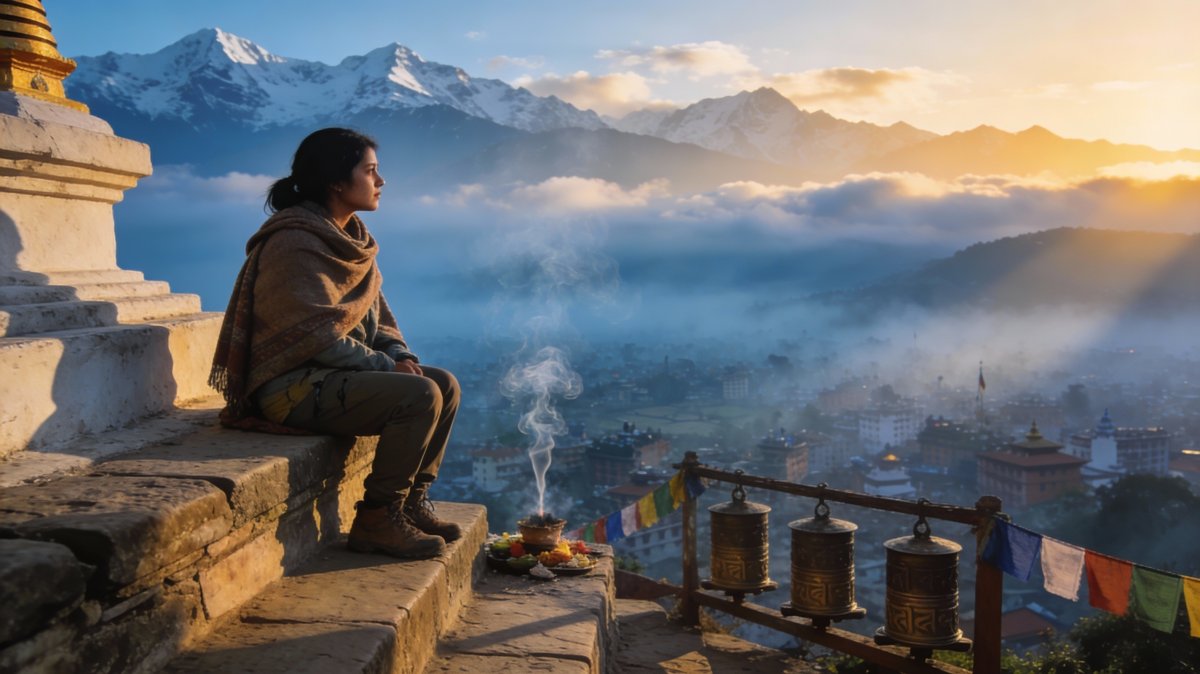
I was sitting by myself on the cold steps of Swayambhu, watching the sunrise and incense smoke rise like a silent prayer. Down below, Kathmandu was waking up with the sounds of car horns, crows, and a vegetable seller calling out in the distance.
But up there, in that quiet space between the holy and the alone, all I could hear was my own breathing and the gentle spinning of prayer wheels turned by people I didn’t know.
I was not there with my family on a dutiful pilgrimage. I was not there as a tourist, guidebook in hand. By walking alone through Nepal's ancient trails and sacred spaces, I was retracing my own roots. With each step, I wasn't just discovering Nepal, I was remembering who I was before the world told me who to be.
That morning, I remembered something our grandparents understood, but we often forget: the most important journey you can ever take is the one you take alone into the depths of your own heart.
Have you ever looked at the trail to Muktinath and wondered who you’d be if you walked it without the chorus of family opinions? Have you stood at a local jatra and felt both surrounded and utterly alone in the crowd? That’s the call of the solo yatra, a journey that is not about escaping Nepal, but about encountering it, and yourself, with new eyes. For us, traveling alone through our own homeland isn’t rebellion; it’s the ultimate homecoming to the self.
Why Solo Travel in Nepal Feels Both Terrifying and Liberating
The vulnerability of traveling alone as a woman takes on a different form in Nepal. It’s not met with suspicion, but with a collective, caring concern. When I arrived alone at a family-run guesthouse in Dhulikhel, the owner’s first question wasn’t about my passport or payment. It was a gentle, puzzled, ‘Only one?’ followed by a thoughtful pause. That night, her daughter ‘happened’ to bring extra blankets, and her son ‘coincidentally’ confirmed my taxi for the next morning. My solitude wasn’t ignored or challenged; it was quietly, compassionately, safeguarded by an entire household. I wasn’t just a guest. I had become, for a few days, their responsibility.
But the liberation on the other side is transformative. In our community-focused society, solo travel becomes an act of (swayan siddha) self-validation. When you navigate the bazaar of Pokhara alone, choose your own meal in a Janakpur bhojanalaya, or decide to stay an extra day in Tansen simply because your heart says so, you’re not just traveling, you’re practicing a new relationship with yourself. The mountains become your “gurus”, the rivers your confidants, and the ancient trails your path to inner authority.
What Walking Alone Teaches You (That Even Our Granthas Don’t)
Self-Reliance: Finding Your Inner Mountain Guide
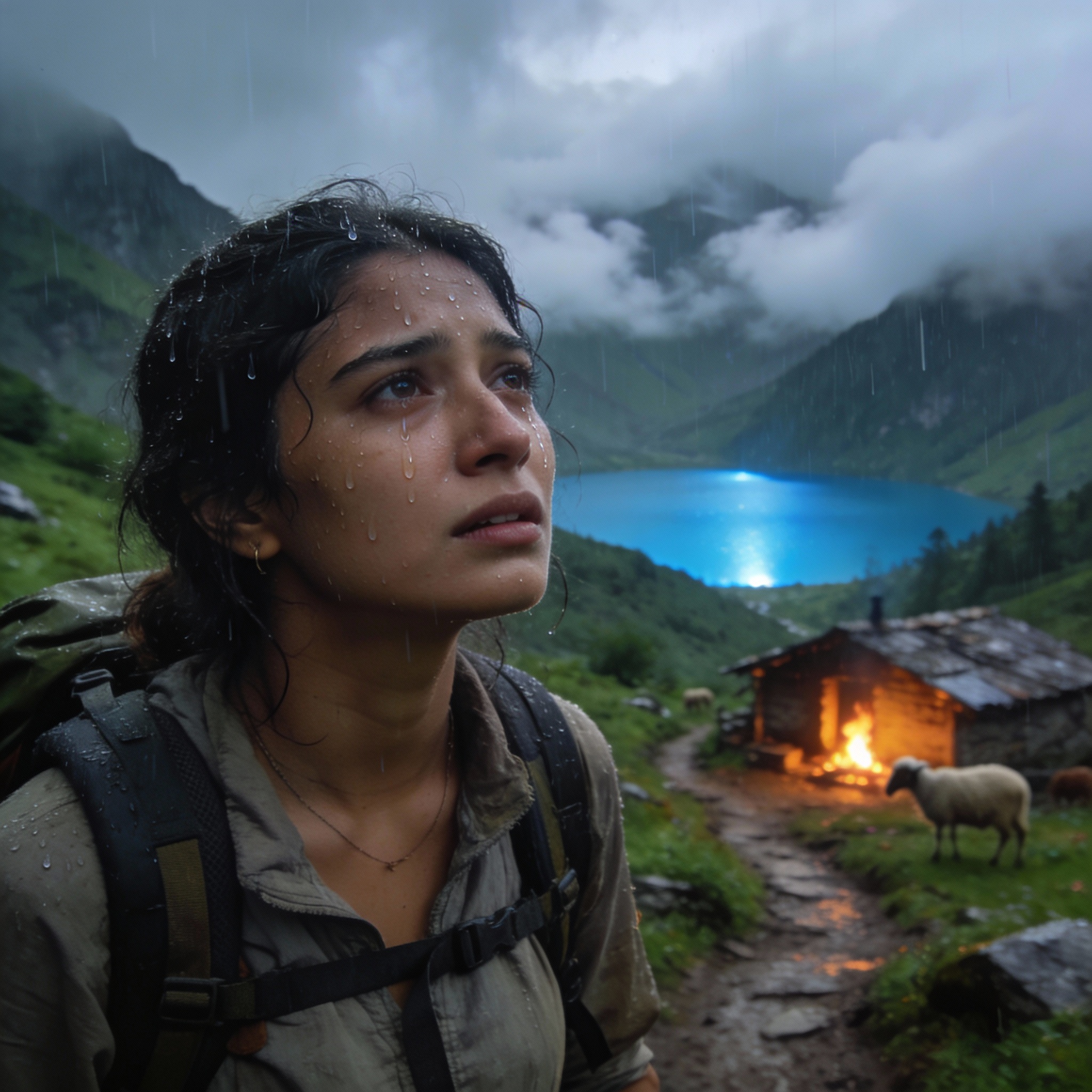
I learned what real strength feels like not by climbing to Everest, but by getting stuck on a muddy trail near Rara Lake in the monsoon.
The rain wouldn't stop. My cheap umbrella was a joke. The green hills I thought I knew looked like a different planet.
There was no friend to whine to. No one to help me decide what to do. I had to be my own best friend and my own guide.
I took shelter in a shepherd's hut. A family moved over, made space by their fire, and shared their simple corn bread with me. They didn’t ask why I was alone.
Then the rain stopped. The clouds parted. And there was Rara Lake, shining like a blue jewel in the mountains.
I cried then, my tears mixing with the rain on my face. I realized I hadn't just made it through the storm.
I had carried my own shelter inside me all along.
Traveling alone in Nepal teaches you to carry your own weight. You'll bargain for a jeep seat with strangers. You'll walk through a quiet, empty Kathmandu during Dashain when the city feels asleep. You'll learn to find your path by the stars in Mustang when your battery runs out.
This isn't just about getting from place to place. It's about learning to trust yourself. The same gut feeling that helps find your way through the winding alleys of Patan will help you find your way through life's tougher moments.
Comfort with Solitude: The Gift of Your Own Mandala
As a foreign woman traveling through Nepal, I discovered a beautiful truth: this is a culture built on profound togetherness, yet within that warmth lies the sacred gift of solitude.
I spent three quiet days in Lumbini’s monastery zone. Each morning, I attended a different prayer service. Each afternoon, I walked the meditation paths alone. Nobody asked me where I was from, what I did for work, or who was waiting for me at home. I was not a tourist with a purpose. I was just a person, sitting quietly among other people sitting in silence.
In the silence, away from the constant pull of emails and social media, I found a space I didn’t know I needed. A space to hear my own thoughts. A space where my own voice, often drowned out by the noise of daily life, could finally speak.
I learned that being alone at a place like Gosainkunda Lake isn't about loneliness. It’s the opposite. It’s about feeling connected to something far greater than yourself. It’s about having a silent, sacred conversation with the mountains, the sky, and your own soul.
Openness to Connection: Beyond What Meets the Eye
It sounds strange, but traveling alone actually helps you connect with people more deeply.
When you don't have friends with you, there's no wall between you and the world. You're just a person. And people see you that way.
When I was alone, people shared more openly. In Gorkha, elders told me private stories over local wine. In Chitwan, “tharu” community grandmothers taught me traditional dances, joking with me like a granddaughter. And in Boudha, a refugee woman quietly thanked me for asking about her journey, not her handicrafts.
When you travel alone, you listen better. And when you listen better, people trust you with their true stories.
Your First Solo Yatra: A Practical Guide for Nepali Souls
Nepali-Specific Safety: Walking with Wisdom
Emergency Numbers Every Nepali Should Know:
- Police: 100
- Tourist Police: 1144 (helpful even for Nepalis)
- Ambulance: 102
- Fire: 101
- The District Police Station number is saved in your phone
Festival Wisdom:
- Good for Solo Travel: Shree Panchami (quiet, scholarly energy), Buddha Jayanti (spiritual, peaceful crowds in Lumbini)
- Challenging for Solo: Dashain/Tihar (transport packed, everything closed), Holi (especially for women traveling alone, consider staying indoors)
- Magical but Crowded: Indra Jatra, Rato Machhindranath, and other local celebrations go early morning for a spiritual experience, and avoid evening crowds.
If the police stop to ask you questions, don't panic. Be polite and calm. Have your passport ready. You can simply say, "I am traveling alone." They are almost always just checking that you are safe. In very remote places, consider introducing yourself at the local police post. This isn’t about suspicion; it’s about safety. If something goes wrong, they’ll know who you are and where you might be.
Cultural Sensitivity: Walking with Respect
Temple manners for Solo Visitors:
- Circumambulate clockwise at Buddhist stupas and Hindu temples (observe locals first)
- Remove shoes before the main courtyard, not at the last possible moment
- As a solo woman, cover your shoulders and knees; carry a shawl in your bag
- Don’t point feet at deities or monks; sit cross-legged or kneel
- Photography: When alone, ask “Photo lina mildinchha?” with joined hands
Respectfully Declining:
- To persistent vendors: “Pachhi bhetaula, ahile chahidaina.” (We’ll meet later, don’t need now.)
- To unwanted food/drink offers: “Bhok chaina, dhanyabad.” (Not hungry, thank you.)
- To intrusive questions: “Ma thik chu, chinta nagarnus.” (I’m fine, don’t worry.) with a smile, then change the subject.
Caste/Region Awareness:
- In Hill regions: Don’t step over someone’s legs or food
- In Terai Madhesh: Use the right hand for giving/taking
- In Buddhist areas: Don’t touch heads (even children)
- Everywhere: Notice if you’re being served food separately, it might be caste practice; accept gracefully
Monsoon/Winter Considerations: Nepali to Nepali Advice
Seasonal Wisdom:
- Oct-Nov: Perfect everywhere but crowded; book transport early
- Dec-Feb: Magical in Pokhara/Chitwan, challenging in the mountains; roads to Mustang/Manang close
- Mar-May: Rhododendron season! Ideal for solo trekking
- Jun-Sep: Monsoon, perfect for solo rain meditation in Lumbini monasteries, but avoid the landslide areas
Solo Bus Travel Reality Check:
- Night buses: The upper berth is safer for solo travelers
- Local buses: Sit near women/families if you’re female
- Mountain roads: Sit on the hillside, not the valley-side, for less anxiety
- Always have: Water, ORS, plastic bag (for motion sickness), power bank for mobile charge
A Crucial Note on Altitude
A common and dangerous mistake is thinking, "It won't happen to me." It can happen to anyone. If you are planning to go above 3,000 meters:
- Spend a night in Dhampus before ABC, Namche before EBC
- Drink Tulsi tea with ginger
- Headache + nausea = descend 500m immediately
- Tell someone your route, even fellow travelers
Coming Home Changed
The hardest part of any journey isn't the traveling, it's the coming back. You'll return to your old life, but you won't be the same person you left before. The real challenge is learning how to bring this new version of yourself back into your daily world.
- Keep a solo hour each day, morning tea on your roof, writing in your letter
- Practice making decisions, order different food from the family sometimes
- Visit local sacred spaces alone, even a temple near where you are staying.
When friends ask, "Weren't you scared to travel alone?" you can smile. The truth is, life is scary everywhere. But traveling alone teaches you that you carry your own courage within you.
The confidence you built. Discussing the price in a Bhaktapur market will help you speak up at work. The stillness you found watching the sunrise at Sarangkot will be a calm space you can return to in stressful times. You won't just bring back souvenirs from Nepal, you'll bring back a stronger version of yourself.
The Path That Was Always There
This kind of journey is not about running away from your life. It’s about returning to the very core of it. It’s about discovering who you are when no one is watching, beyond your job title, relationships, or your daily routine.
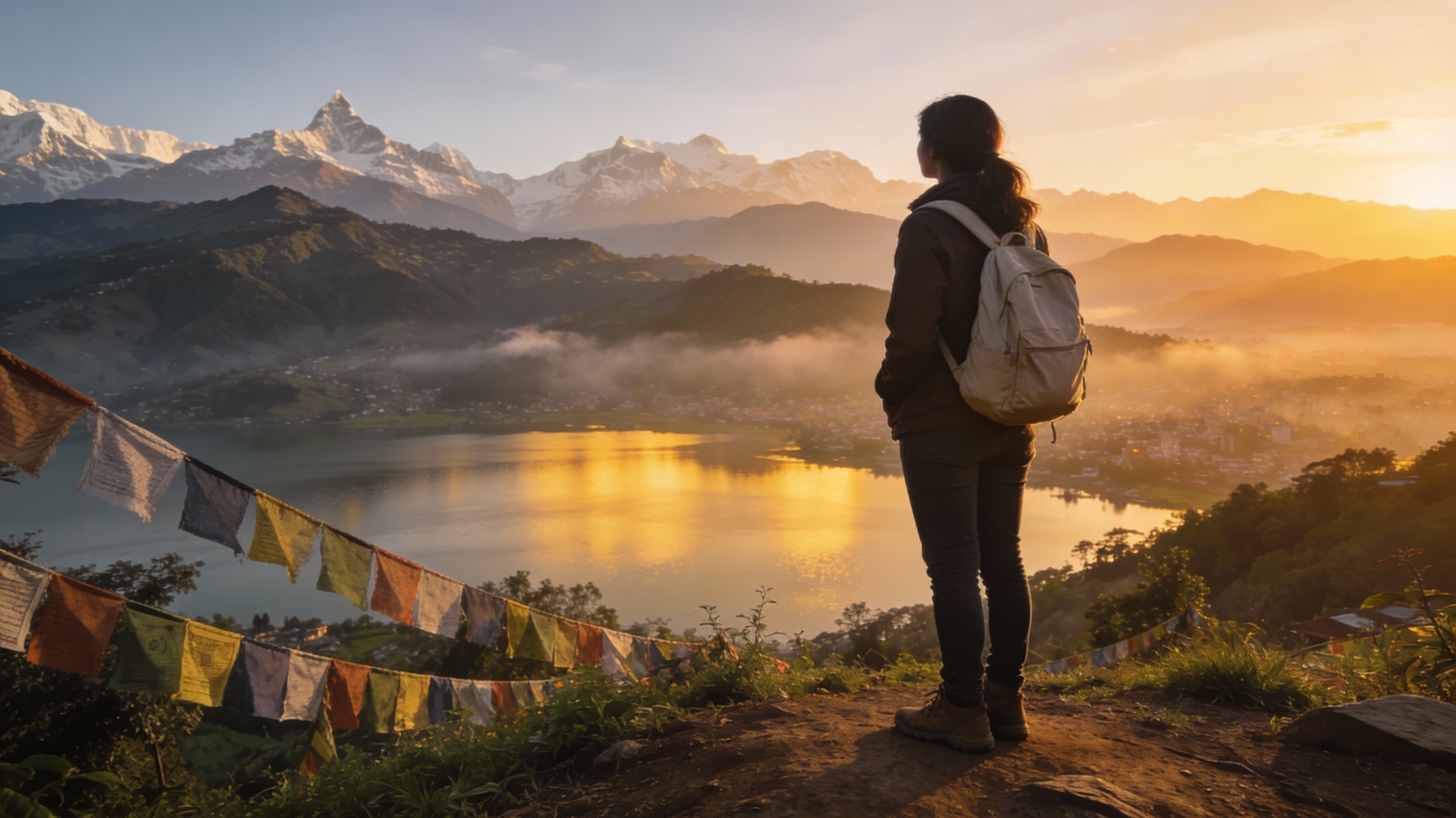
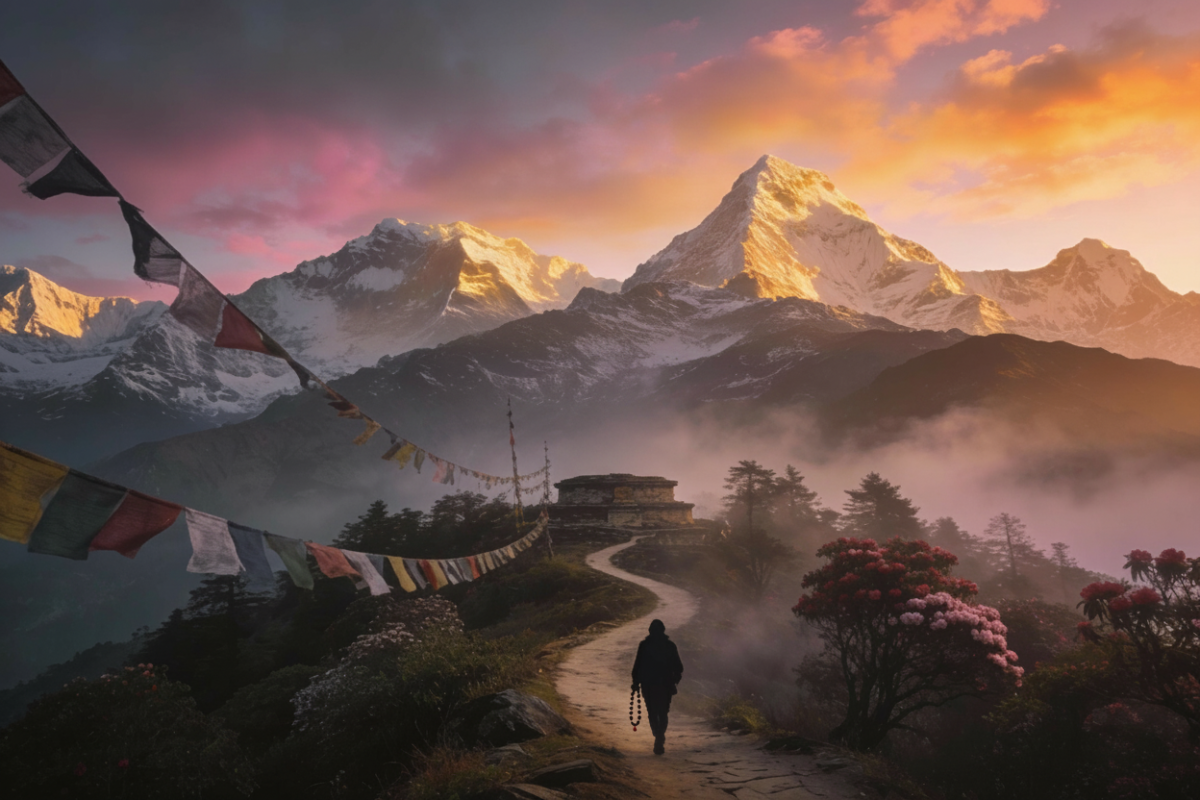
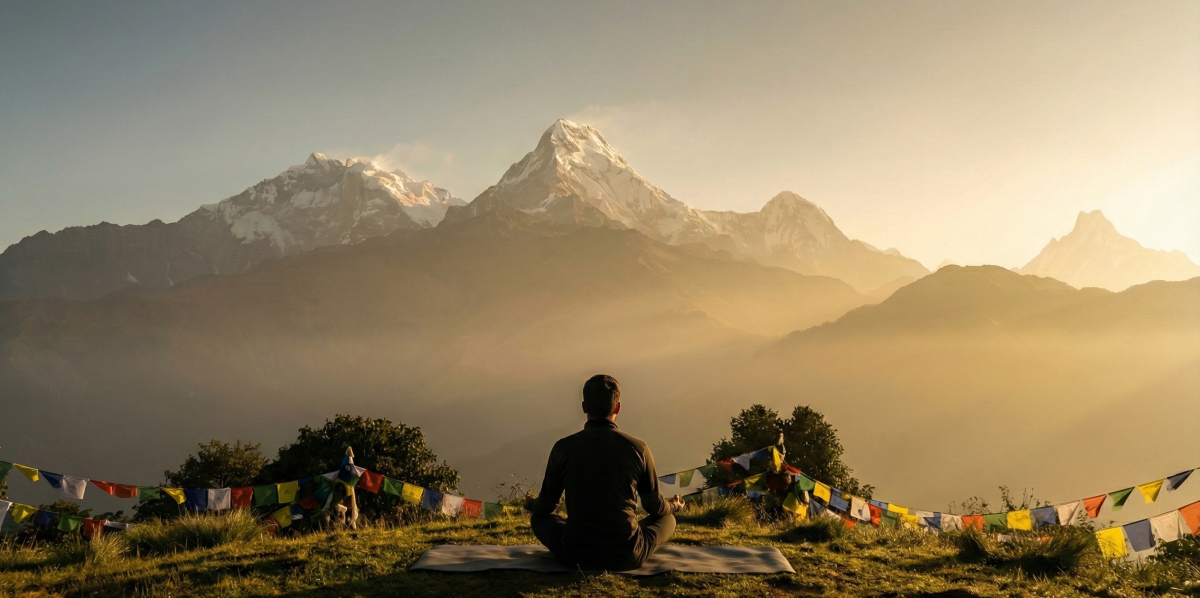
The Himalayas have been waiting for your footsteps, not a tour group’s. The morning chant at a monastery has been waiting for your silent attention. The forest path has been waiting for your quiet breath.
So when you feel that pull, when you look at a map of the Annapurna circuit or a photo of a temple in Patan and think, "Could I?" know this: You are part of an ancient tradition of seekers. You are not being reckless; you are being brave in the oldest way.
Book the ticket. Pack your bag. Tell a friend you’ll check in. And go not to escape, but to meet the strong, calm, and capable version of yourself that has been waiting for this journey all along.

Comments (0)
No comments yet. Be the first to comment!
Leave a Comment