Table of Contents
Sacred Journeys: Finding Spirit in Travel – Nepal Edition
A Guide to Transformative Trekking and Spiritual Discovery in the Himalayas
Nepal offers something special for travelers looking to go deeper than just visiting famous places. Here, walking paths can feel like pilgrimages, and every trip can help you discover something new about yourself inside. This isn't just an adventure destination; it's a place where travel transformation can be meaningful and spiritual.
The Himalayas are more than just a pretty view. They feel alive, almost like guides on a journey of the soul. In Nepal, you don't just see the sights, you experience them with your whole being. It's a country that naturally invites you to travel slowly, thoughtfully, and with heart.
People have long believed that travel can be a sacred act, a way to grow and change on the inside. Think of historic pilgrimages like Spain's Camino de Santiago or India's Kumbh Mela. These journeys show how moving your body can also move your spirit.
Today, many travelers are returning to this idea. They're choosing trips that are less about checking sights off a list, and more about meaning and mindfulness. Any trip can become a pilgrimage if you travel with purpose, stay present, and show respect.
Nepal is the best for this kind of thoughtful, soulful, and eco-friendly journey. Here, spirituality is not just for temples; it's part of everyday life. This guide will help you experience Nepal in a way that honors its incredible landscapes and also nurtures your own inner journey travel.
Nepal: A Landscape for the Soul
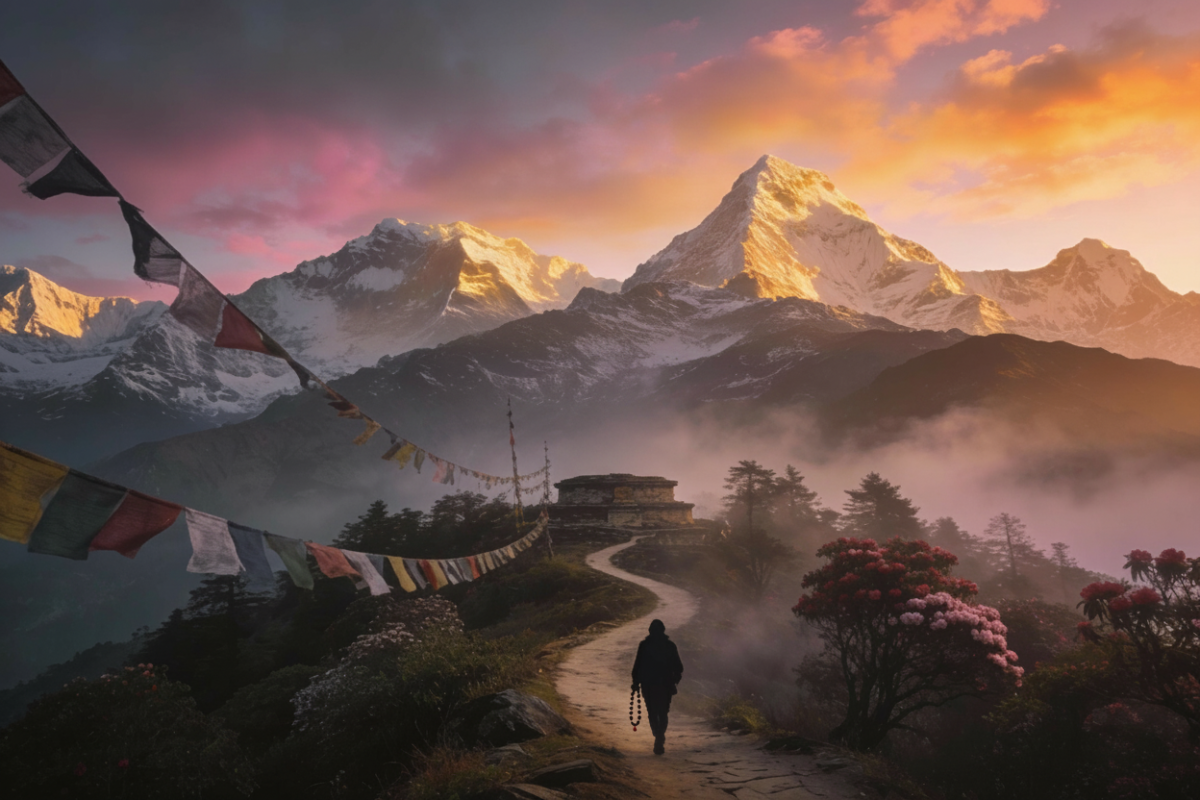
You can see Nepal's spiritual heart just by looking at the land. The scenery changes from green, tropical lowlands all the way up to the breathtaking, snowy peaks of the Himalayas. Walking through these places, you can't help but feel small in the best way, learning about change, strength, and pure wonder. Trekking here is a full experience for your soul, asking you to be truly present.
Spirituality in Nepal is part of daily life, blended with Hinduism, Buddhism, and older local traditions. You'll see it everywhere: a Buddhist stupa and a Hindu temple side-by-side, prayer flags flying over villages, and people performing small daily rituals. You soon realize that faith here is not just for special days or buildings, it's alive in the streets, the hills, and the air. This makes Nepal a perfect place for a spiritual trek, where the trail itself feels like a path to something greater.
Spiritual Trekking Routes: Paths of Transformation
The following routes are more than physical challenges; they are curated passages through diverse cultural and spiritual geographies. Each offers a distinct flavor of pilgrimage trekking and an opportunity for profound reflection.
Everest Base Camp Trek: Walking with Giants
A trek to Everest Base Camp is popular as a huge physical challenge. But its true gift is the chance to walk through the heart of Sherpa culture.
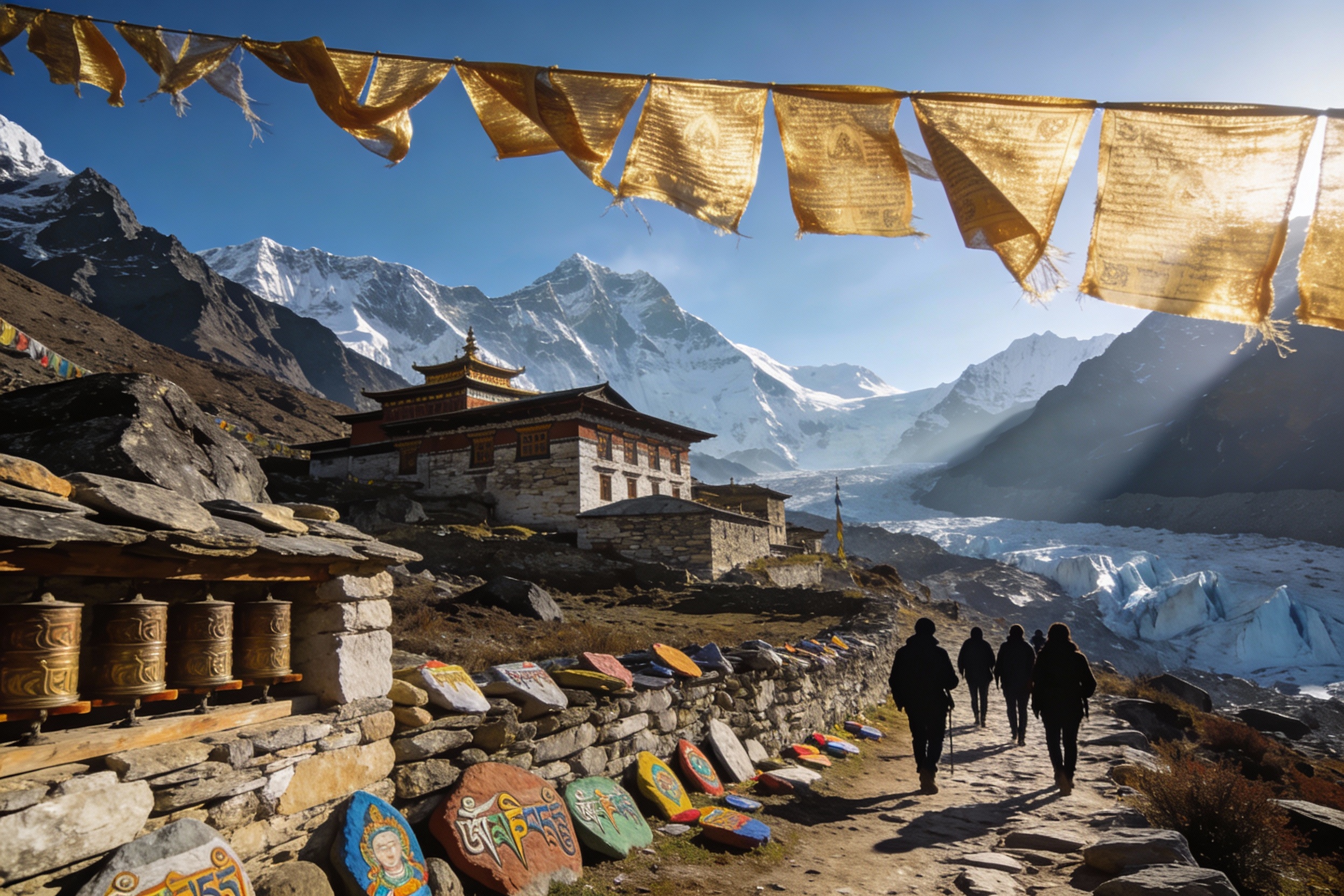
The path itself feels like a walking meditation. You'll pass stone walls carved with prayers and spin prayer wheels as you go. Places like the Tengboche Monastery offer quiet moments for reflection, surrounded by giant peaks.
This trek becomes a sacred journey when you walk with respect for the mountains and for the people who call them home. Simple acts help: walk clockwise around stupas, move quietly through peaceful valleys, and take a break sometimes to breathe deeply in the thin mountain air. It changes a hike into something more inside.
If you want to understand this feeling better, Peter Matthiessen's book The Snow Leopard is a classic about searching for meaning in the Himalayas.
Recommended Reading: Check "The Snow Leopard" on Amazon
For a trip that focuses on this thoughtful, immersive style, companies like Nepal Trekking Planner plan journeys that blend physical climbing with deep cultural and spiritual connection.
Annapurna Circuit: Diversity of Spirit
The Annapurna Circuit is famous for its incredible variety. On this trek, you'll see it all from green, stepped farmlands and pine forests, up over the huge Thorong La Pass (at 5,416m), and down into the dry, desert-like landscape of Mustang. Walking this changing route is a real-life lesson in how nothing stays the same, a key idea in Buddhist thought.
Crossing the high pass is more than just a climb. For many, it feels like crossing a personal limit, leaving old fears or ideas about yourself behind. Along the way, you'll find natural hot springs, old temples, and villages where Hindu and Buddhist customs blend.
With so much changing around you, writing in a journal can help make sense of the new sights and feelings.
Travel Companion: Travel journal ideal for trekking reflections
To learn more about the area's nature and culture, the Annapurna Conservation Area Project is an excellent resource to check out.
Upper Mustang: The Forbidden Kingdom
Upper Mustang feels like a piece of Tibet nestled inside Nepal. It offers an unforgettable look into a Tibetan Buddhist world that has been carefully protected for centuries.
The landscape is dry and carved with deep canyons. Scattered across it are ancient monasteries built into cliffs and medieval walled towns, like Lo Manthang. Because access was limited for so long, the local culture has stayed incredibly strong and unchanged by the outside world.
Traveling here feels like stepping into a living mandala. The spiritual atmosphere is palpable, defined by chanting monks, intricate thankga paintings, and a stark, majestic landscape that invites introspection. Due to its sensitive ecosystem and culture, visiting Mustang is a privilege that demands the highest levels of ethical and sustainable sacred travel. Choosing operators committed to low-impact, culturally respectful travel is paramount. Companies like Sacred Mustang Journeys focus on deep, slow travel that supports local monasteries and communities.
Helambu & Langtang: Valley of Compassion
Accessible from Kathmandu, capital city of Nepal, the Helambu and Langtang regions provide a potent spiritual trekking experience without the longer time commitment of the classic circuits. The area is home to the Tamang and Hyolmo ("Helambu Sherpa") people, whose rich Buddhist traditions and warm hospitality are deeply moving.
The Langtang Valley, tragically devastated by the 2015 earthquake, has demonstrated remarkable resilience. Trekking here is an act of solidarity and witness, supporting communities that have rebuilt their lives and sacred sites. The trails pass through serene rhododendron forests, past cascading waterfalls, and under the gaze of sacred peaks, offering opportunity for meditation and reflection. Its accessibility makes it an excellent choice for a shorter, yet deeply impactful, pilgrimage trekking experience.
Cultural Immersion: Beyond the Trail
The sacred geography of Nepal extends far beyond its trekking routes. The Kathmandu Valley alone is a dense constellation of World Heritage Sites, each a hub of active worship.
Boudhanath Stupa
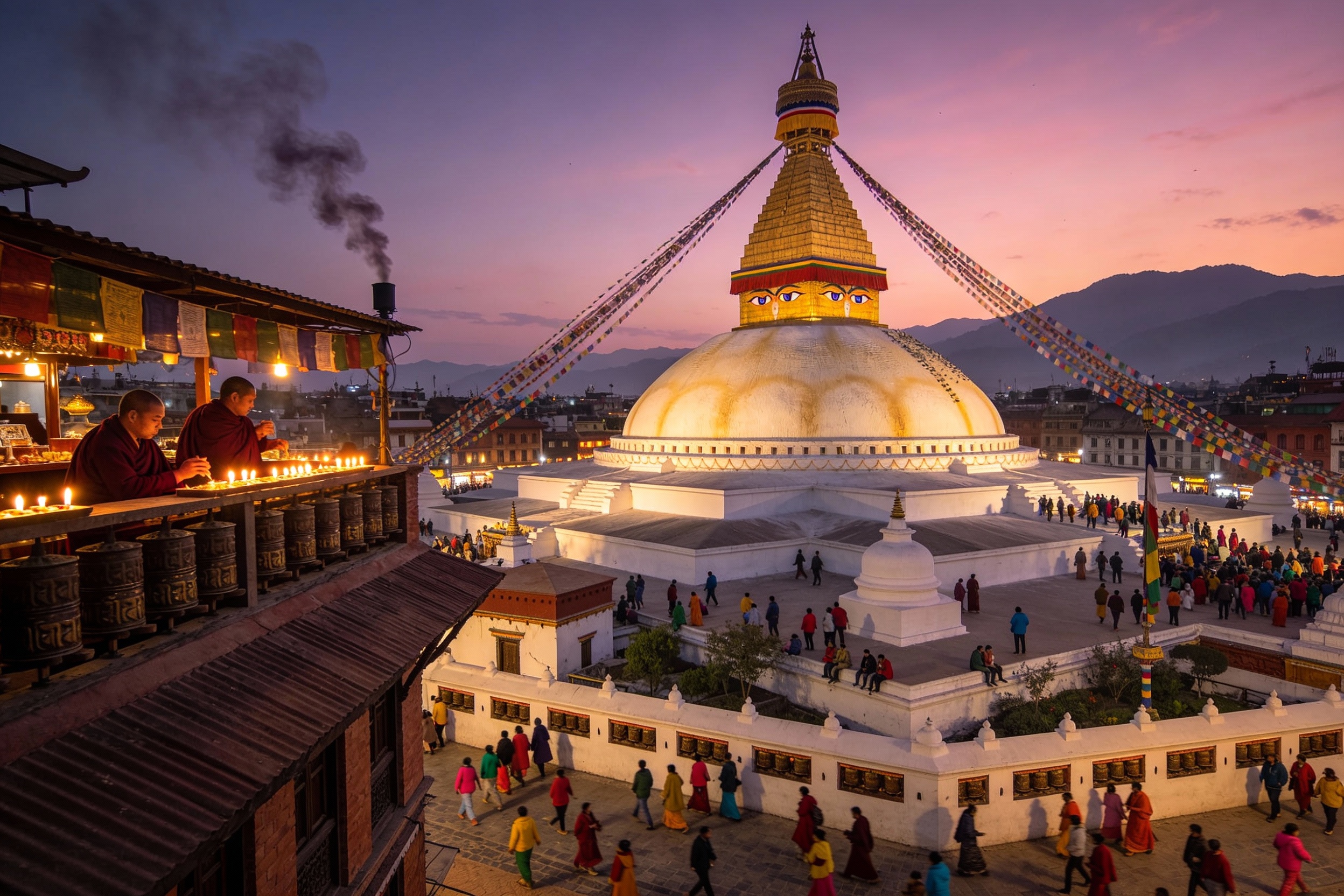
Boudhanath Stupa is more than an ancient monument; it is the vibrant, living heart of Tibetan Buddhism in Nepal. As one of the largest spherical stupas in the world, its majestic white dome is crowned by a towering golden spire. Painted on all four sides are the iconic, watchful eyes of the Buddha, which seem to observe the endless stream of life moving below.
The stupa is encircled by a wide plaza that is constantly alive with motion. Devotees, local Buddhists, monks in maroon robes, and pilgrims from across the Himalayas walk clockwise around its base, spinning the hundreds of prayer wheels embedded in the walls. The low murmur of mantras, the scent of butter lamps and incense, and the rhythmic turning of the wheels create a deeply immersive atmosphere of focused devotion. For visitors, sitting on a rooftop cafe overlooking this timeless ritual offers a profound sense of peace and a powerful connection to Nepal's spiritual soul.
Swayambhunath (Monkey Temple)
Swayambhunath, affectionately known as the Monkey Temple, crowns a green hilltop overlooking the sprawl of Kathmandu. More than just a temple, it is a sacred landmark believed to mark the very birthplace of the Kathmandu Valley itself. Ancient legend says the valley was once a deep lake, and this hill rose from its waters as a radiant, self-created lotus, a symbol of purity and divine emergence.
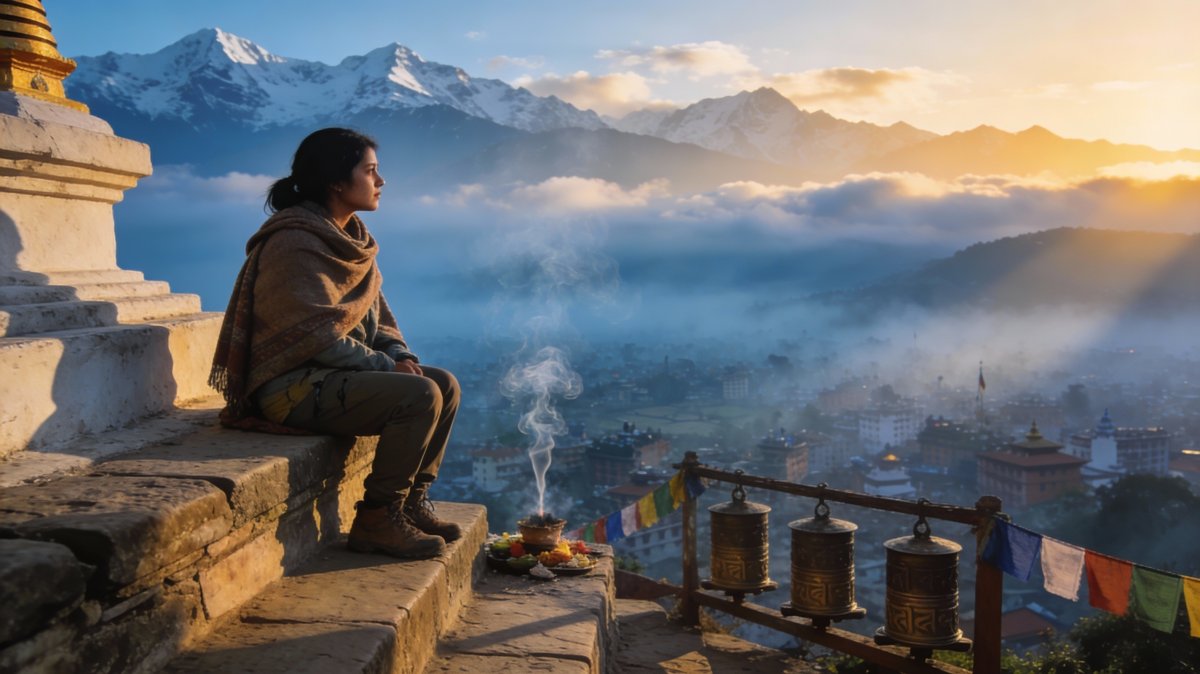
Today, the complex is a vital spiritual crossroads, deeply revered by both Buddhists and Hindus. The central white stupa, with its gilded spire and the all-seeing eyes of the Buddha, is its most iconic feature. Surrounding it is a vibrant tapestry of smaller shrines, temples, prayer wheels, and intricate statues. The air is filled with the scent of incense, the murmur of prayers, and the playful chatter of the troops of sacred monkeys that give the site its popular name. Climbing the steps to the top is a pilgrimage in itself, rewarding visitors with not only profound spiritual energy but also a breathtaking panoramic view of the city below.
Pashupatinath Temple
Pashupatinath Temple is one of the most sacred Hindu sites in the world, a vast and deeply spiritual complex located along the banks of the Bagmati River in Kathmandu. Dedicated to Lord Shiva in his form as Pashupati, the "Lord of All Animals," it is a living center of faith, philosophy, and profound ritual.
Unlike temples that focus only on worship, Pashupatinath presents the full, unvarnished cycle of life and death openly and with reverence. On its stone platforms, known as ghats, you will witness the timeless tradition of open-air cremations, a powerful and sobering reminder of life's impermanence. This is balanced by vibrant ceremonies celebrating life: sadhus (holy men) meditate, devotees perform ritual baths in the river, and families come to pray for health and blessings.
The intricate pagoda-style architecture of the main temple, the peaceful atmosphere of the surrounding forested hills, and the constant, rhythmic flow of ancient practice here create an intense, unforgettable immersion into the heart of Hindu belief and the universal truths it honors.
Lumbini
Lumbini is the birthplace of Siddhartha Gautama, who later became Lord Gautam Buddha. Today, it's a large, peaceful pilgrimage park where visitors from all over the world come to walk and reflect on spirituality.
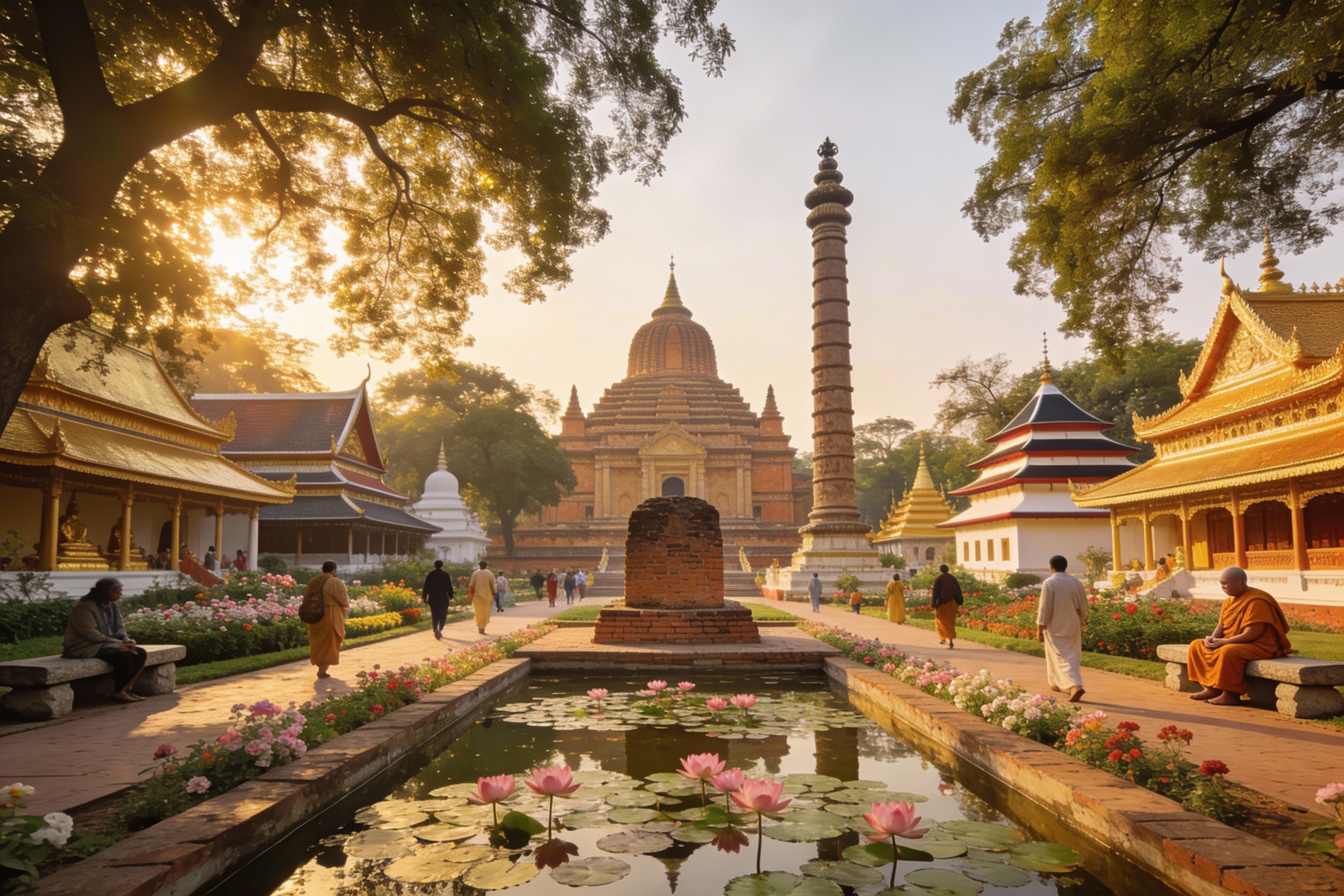
The heart of the site is the sacred Maya Devi Temple, built around the exact spot where the Buddha is said to have been born. Around it, you can explore beautiful monasteries built by Buddhist countries from Nepal and Japan to Thailand and Germany, each with its own typical style and serene gardens.
Even with visitors, a deep quiet fills the air here. Walking along the tree-lined paths or sitting quietly by the pond, you can feel a strong sense of calm. More than just a historic site, Lumbini feels like a living place of peace, welcoming everyone.
A reliable guidebook is necessary for understanding the profound history and ritual significance of these sites.
Guidebook Recommendation: Lonely Planet Nepal guide for cultural context
For official historical background, the UNESCO pages on the Kathmandu Valley sites provide essential context.
Preparing for Your Sacred Journey: Practical Spirituality
Effective preparation for a Nepali pilgrimage extends beyond physical training and gear checks. It involves cultivating the inner resources that enable a respectful and transformative experience.
Physical Training as Mindfulness
Think of your training hikes and yoga as the first step of your journey, a way to prepare your mind as you strengthen your body. Getting in good shape means you'll be more comfortable on the trail. And when your body feels strong, your mind is free to be more open, calm, and truly present.
Mental and Spiritual Preparation
Before you go, take a moment to prepare your mind and spirit. This is just as important as packing your bag.
Start by asking yourself: What is my deeper reason for going? Is it to find clarity, to heal, to practice gratitude, or just to be fully present? Having a clear intention acts like a compass for your journey.
Learning a few words in Nepali, like "Namaste" for hello and "Dhanyabad" for thank you, is a small gesture that goes a long way. It shows respect for local culture and helps you connect more warmly with the people you meet.
Finally, try starting a short daily meditation, even just five minutes. It's like exercise for your attention. Building this "mindfulness muscle" now will help you stay calm, focused, and open to all the experiences waiting for you on the trail.
Cultural Respect
Respect is the most important part of mindful and responsible travel. To show respect, follow these simple practices:
- Dress modestly by covering your shoulders and knees.
- Always remove your shoes before entering someone's home or a temple.
- Avoid pointing your feet at people or sacred objects.
- Always ask before taking someone's photo.
You can also bring a small personal item for your own reflection, like a travel altar or prayer beads, so you can practice quietly without interfering with local customs.
Meditation Aid: Travel meditation accessory kit
The Inner Journey: Practices for the Trail
The rhythm of trekking, the steady pace, the connection to breath, and the absence of digital noise create a natural container for introspection. These practices can help deepen the experience:
Morning Intention
Before starting each day's walk, take a quiet moment to set a simple intention. For example: "Today, I walk with curiosity," or "Today, I embrace whatever comes with equanimity."
Walking Meditation
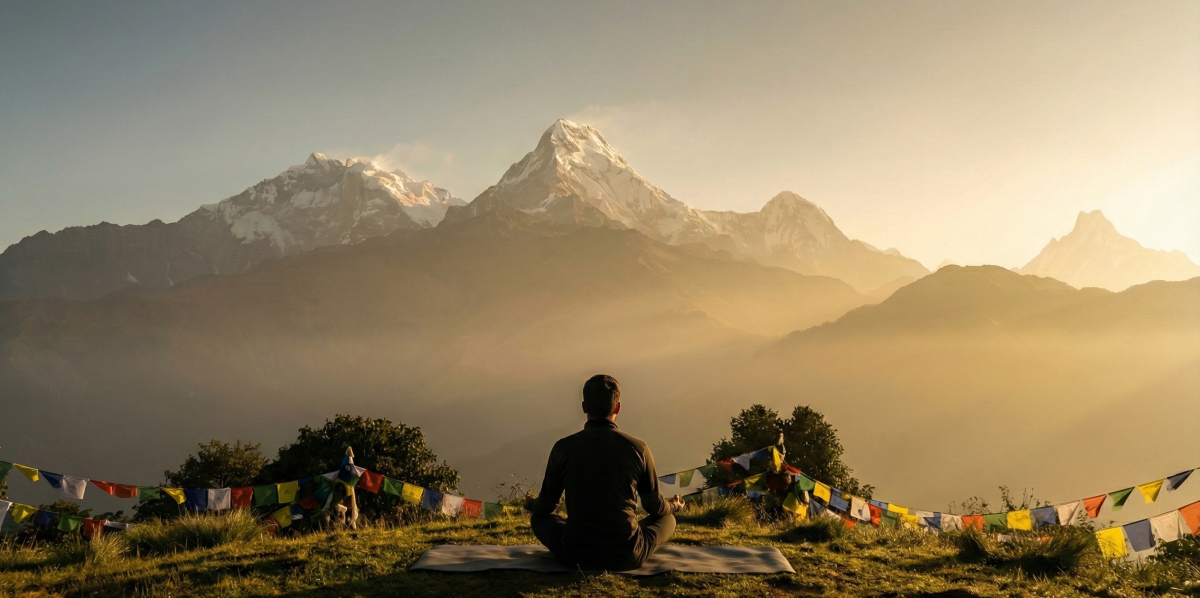
Let the walk itself become the practice. Focus on the sensation of each footfall, the rhythm of your breath matching your steps, or the sounds around you, the wind, distant bells, your own heartbeat. Periods of silent walking, even for an hour, can be profoundly revealing.
Journaling Prompts
Evening journaling helps integrate the day's lessons. Prompts might include: "What did the landscape teach me today?" "Where did I meet resistance, and what might it be showing me?" or "What simple moment brought the most joy?"
Studies show that walking meditation is a great way to lower stress and feel more mindful. This makes it an ideal practice to use while you're on the trail.
Ethical & Sustainable Sacred Travel
To ensure your journey honors the people and places that facilitate it, conscious choices are essential.
Support Local Economies
Hire local guides and porters through reputable companies that ensure fair wages and treatment. Stay in family-run teahouses, eat local typical food, and purchase crafts directly from artisans.
Practice Leave-No-Trace Principles
Caring for the trail is a way of showing respect. Follow these simple rules:
- Take all your trash with you.
- Use biodegradable soap, and don't wash in rivers or streams.
- Stay on marked paths to protect plants and soil.
- Carry a refillable water bottle with a filter to cut down on plastic waste.
Respect Sacred Spaces
Observe ceremonies and rituals from a respectful distance unless explicitly invited. Maintain quiet near monasteries and shrines. Follow the lead of locals; if they are walking in a circle around a stupa clockwise, do the same.
Organizations like the Community Homestay Network in Nepal connect travelers directly with village families, ensuring tourism revenue supports grassroots community development and cultural preservation.
Bringing the Mountain Home: Integration
The real test of a meaningful trip is how it stays with you once you're back home. Returning to your normal routine can feel surprisingly difficult, a feeling often "reverse culture shock."
Integration is the conscious process of weaving the insights and rhythms of the journey into everyday existence. This might involve:
- Establishing a daily ritual, such as a morning meditation with a cup of Nepali tea or a moment of gratitude, recalling the mountain vistas.
- Creating a small home altar with a photograph, a found stone, or a set of prayer flags as a tangible reminder of the journey's spirit.
- Continuing to support Nepali communities through reputable charities or by championing the work of ethical travel operators.
Bring Nepal Home: Authentic Nepali tea for mindful mornings
Conclusion: The Journey Continues
A pilgrimage to Nepal does not end upon departure from Tribhuvan International Airport. The journey continues in how one chooses to view the world: with a little more wonder, a little more patience, and a deep-seated knowledge that sacred spaces exist both in the shadow of the Himalayas and in the quiet corners of everyday life. The mountains teach resilience, the culture teaches devotion, and the trails teach presence.
The invitation, then, is to move beyond planning a simple trip. Plan a pilgrimage. Approach Nepal not just as a destination to be consumed, but as a teacher to be engaged with humility and an open heart. Let your journey be sacred in the truest sense, one that transforms your understanding of both the world and your place within it.
Disclosure: Some links in this guide are affiliate links. This means we may earn a small commission if you purchase them, at no extra cost to you. These commissions help support the creation of in-depth, respectful travel content. We only recommend products, services, and operators that genuinely align with the principles of mindful, ethical, and transformative travel.

Comments (0)
No comments yet. Be the first to comment!
Leave a Comment